- Beyond Initial Spec: Evaluating a connector requires looking past immediate voltage ratings to analyze long-term metallurgical stability and stress relaxation curves.
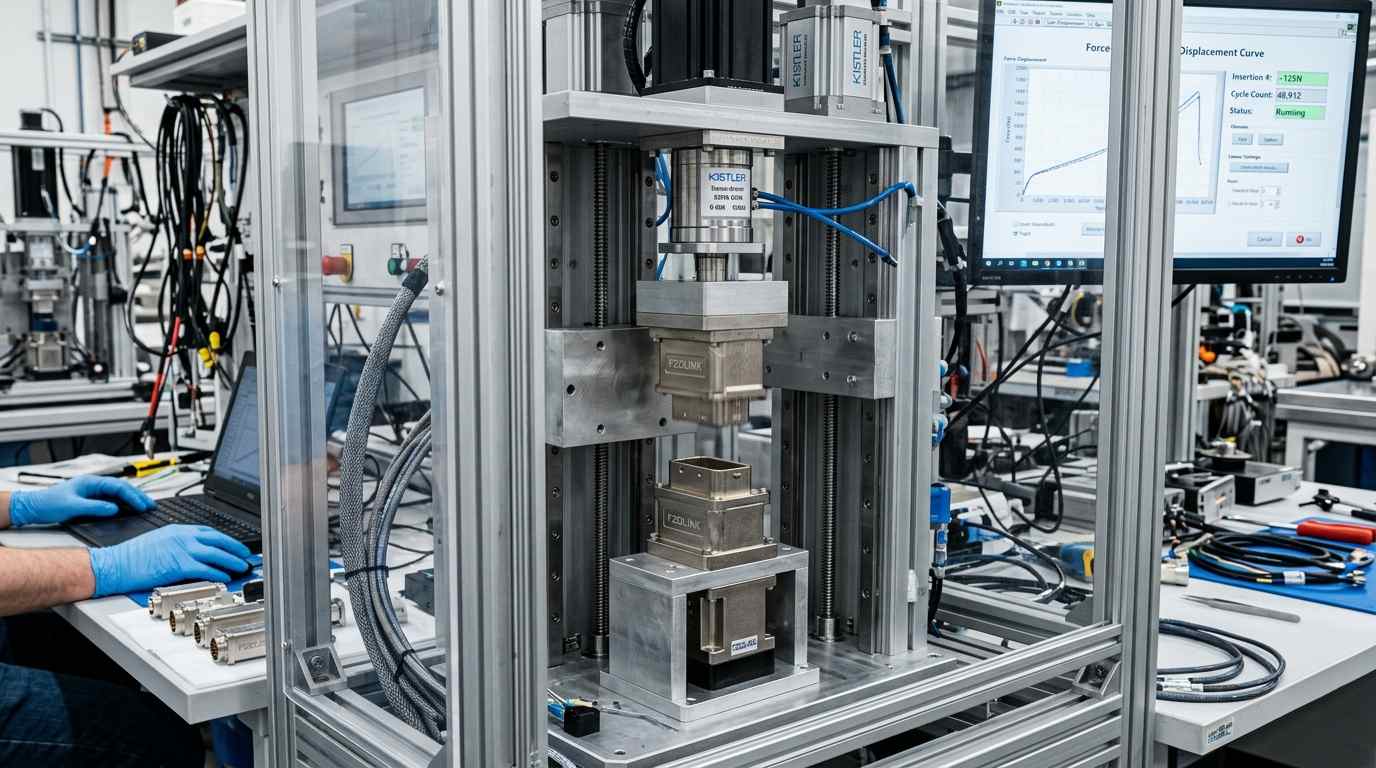
- Mating Endurance: Understanding the science of mechanical wear helps engineers select contacts that survive thousands of insertion cycles without degrading electrical conductivity.
- Environmental Stress Testing: Accelerated Life Testing (ALT) metrics, including salt-spray endurance and thermal shock resistance, provide the true benchmark for field reliability.
-
Custom Optimization: Partnering with experienced manufacturers for tailored engineered cable assemblies ensures perfect spatial and mechanical alignment.
In the realm of mission-critical engineering, the true cost of an electrical component is never measured by its initial purchase price, but by its total operational lifecycle. When industrial machinery, renewable energy power plants, or automated manufacturing lines are deployed in remote or harsh environments, maintenance interventions are exceptionally costly. An unexpected component failure can halt an entire facility, translating to thousands of dollars in lost productivity every minute. Therefore, system architects and senior procurement engineers must look deeply into the scientific variables that dictate the service life of electrical hardware. This comprehensive technical guide explores the core parameters of connector durability, accelerated testing methodologies, and how meticulous engineering choices ensure decades of uninterrupted performance.
1. Metallurgical Stress Relaxation and Contact Normal Force
The fundamental physics governing long-term electrical performance centers on contact normal force—the physical pressure exerted by a female socket spring against a male contact pin. Over extended periods of operation, particularly under elevated thermal conditions, base metals undergo a phenomenon known as stress relaxation. This is a progressive, time-dependent loss of elastic spring force under constant mechanical strain.
When stress relaxation occurs, the contact normal force drops below the critical threshold required to wipe away microscopic surface oxides. This leads to a gradual increase in contact resistance, localized Joule heating, and eventual thermal failure. To counteract this, high-reliability designs reject standard brass in favor of advanced copper alloys like beryllium copper or phosphor bronze, which maintain their elastic memory across extreme temperature ranges. Utilizing premium components such as heavy-duty circular metal interfaces ensures that contact pressure remains stable throughout decades of continuous thermal cycling.
2. Quantifying Mating Cycle Endurance and Mechanical Wear
In dynamic applications—such as modular tooling changes on robotic arms, diagnostic equipment ports, or portable test instruments—connectors are subjected to repeated mating and unmating cycles. Every time a plug is inserted, microscopic asperities (surface peaks) on the contact plating rub against each other, creating mechanical wear.
Engineers evaluate durability by reviewing the manufacturer's mating cycle rating. Achieving a high endurance rating (ranging from 500 to over 5,000 cycles) requires precise control over plating thickness and hardness. For instance, an optimal gold-over-nickel plating layer must be thick enough to withstand repeated sliding friction without wearing through to the reactive copper substrate underneath. When designing mobile or frequently reconfigured setups, specifying robust high-current power transmission plugs with hardened mating surfaces prevents premature mechanical failure.
3. Accelerated Life Testing (ALT) and Environmental Simulation
Because waiting 25 years to see if a connector survives in the field is impractical, manufacturers rely on Accelerated Life Testing (ALT) protocols. These rigorous laboratory procedures simulate decades of harsh environmental aging in a matter of weeks by intensifying stress factors.
- Thermal Shock Chambers: Rapidly cycling the connector between extreme cold (-40°C) and high heat (+125°C) to test the differential expansion rates of plastic housings and metal pins.
- Salt-Spray (Fog) Testing: Exposing mated connectors to a dense, saline atmosphere for hundreds of hours to verify the corrosion resistance of metal shells and plating finishes.
- Vibration and Shock Tables: Subjecting samples to multi-axis harmonic vibrations to ensure internal locking mechanisms and seals remain completely undisturbed.
4. The Role of Custom Engineering in Eliminating Field Failures
While standard off-the-shelf components satisfy many general requirements, high-performance applications often present unique spatial, thermal, or mechanical challenges that standard parts cannot fully resolve. For instance, cramped equipment enclosures may create severe cable bending radii, placing continuous lateral tension on terminal pins and causing micro-fractures over time.
In such scenarios, working directly with an experienced factory to develop tailored solutions is essential. Customizing wire lengths, incorporating specialized strain-relief boots, and selecting bespoke sealing gaskets ensures that the entire assembly is perfectly harmonized with its operating environment. For applications exposed to continuous outdoor moisture, dust storms, or chemical washdowns, deploying precision-engineered IP67/IP68 waterproof connector systems provides the ultimate safeguard against premature environmental degradation.
Lifecycle Evaluation Parameters and Engineering Benchmarks
| Evaluation Parameter | Underlying Physical Mechanism | Recommended Engineering Countermeasure |
|---|---|---|
| Stress Relaxation | Thermal-induced loss of elastic spring force over time. | Specify beryllium copper spring contacts with high thermal stability. |
| Mating Wear | Friction scraping away plating layers during insertion cycles. | Ensure optimal gold/silver plating thickness and hardness. |
| Corrosion Aging | Electrochemical oxidation and moisture-induced galvanic reactions. | Deploy IP68 sealed housings and corrosion-resistant metal shells. |
| Mechanical Fatigue | Vibration stress concentration at wire crimp barrels. | Use factory-tested custom wire harnesses with robust strain relief. |
Frequently Asked Questions (FAQ)
How is the operational service life of an industrial connector calculated?
The operational service life of an industrial connector is calculated using accelerated life testing (ALT), which evaluates mating cycle endurance, thermal stress aging, corrosion resistance via salt-spray testing, and contact resistance stability under simulated field conditions.
What factors determine the mechanical mating cycle rating of a connector?
The mating cycle rating is determined by the spring memory of the base copper alloy (such as beryllium copper), the thickness and hardness of the surface plating (gold or silver), and the precision friction tolerances of the male and female contact interfaces.
Why are custom engineering tolerances critical for specialized cable assemblies?
Custom engineering tolerances ensure that specialized cable assemblies fit perfectly within tight spatial constraints, withstand unique mechanical pull-forces, and maintain proper signal shielding integrity in high-noise industrial environments.
Maximizing the reliability and operational lifespan of industrial systems begins with uncompromised manufacturing standards. At Xiamen Olink, we combine advanced metallurgical selection, rigorous accelerated life testing, and tailored OEM/ODM manufacturing capabilities to deliver world-class circular connectors, waterproof interfaces, and robust cable assemblies. Contact our engineering consultants today to discuss how we can elevate the durability of your next industrial project.