Choosing between PPSU fittings vs brass fittings for your plumbing project presents a genuine challenge. No universal winner exists. Your decision hinges on water chemistry, budget, and installation skill. This comparison examines durability, corrosion resistance, temperature ratings, and cost. Contractors report brass costs 20% to 40% more per unit. Switching a 2,000-square-foot build to PPSU fittings reduces material expenses by 15% to 25%. Consider best plumbing fittings material carefully. We provide unbiased, data-backed guidance for selecting your durable pipe connection system.
Key Takeaways
-
PPSU fittings resist corrosion and scale. They cost less than brass fittings.
-
Brass fittings handle higher temperatures and pressures. They work best in underground or high-impact areas.
-
Test your water chemistry before choosing. PPSU suits hard water; brass needs proper pH levels.
PPSU Fittings vs. Brass: Material Fundamentals
Defining PPSU and Its Key Properties
PPSU (polyphenylsulfone) is a high-performance thermoplastic engineered for demanding plumbing applications. You will find it increasingly common in push-to-connect and press-fit systems for PEX piping. This material delivers a remarkable combination of lightweight construction and structural integrity. PPSU fittings exhibit a typical tensile strength range of 70–80 MPa, which proves sufficient for internal fluid pressure in residential and commercial piping systems.
The chemical resistance of PPSU deserves your attention. It withstands weak acids and weak alkalis without degradation. Strong acids present limited resistance, so you should verify compatibility before exposure. This chemical resilience makes PPSU fittings particularly valuable in areas with aggressive water chemistry. Unlike metal alternatives, PPSU will not corrode or scale over time, which extends the service life of your entire plumbing network.
|
Chemical Category |
PPSU Resistance Rating |
|---|---|
|
Weak Acids |
Resistant |
|
Strong Acids |
Limited resistance |
|
Weak Alkalis |
Resistant |
|
Strong Alkalis |
Not rated |
Defining Brass and Its Traditional Strengths
Brass, a copper-zinc alloy, has served plumbing systems for generations. Its reputation rests on mechanical strength and resistance to cracking under pressure and heat. The tensile strength of brass exceeds 300 MPa, far surpassing PPSU. Free-cutting brass per ASTM C36000 reaches 338–469 MPa ultimate tensile strength. This substantial margin explains why engineers often specify brass for high-stress environments.
The copper-zinc ratio determines brass's workability. Yellow brass, approximately 65% copper and 35% zinc, serves as the standard reference for plumbing fittings. Higher copper content enhances ductility, while increased zinc improves strength but reduces formability.
Yellow Brass (65/35 Brass) is explicitly identified for plumbing fittings, with a composition of approximately 65% copper and 35% zinc. This specific ratio is the standard reference point for plumbing applications.
Brass fittings typically appear in threaded and crimp connections. You will find them specified where mechanical robustness matters most. The material's ability to withstand repeated assembly and disassembly cycles makes it a dependable choice for accessible connection points.
Durability and Corrosion Resistance
PPSU's Immunity to Corrosion and Scale
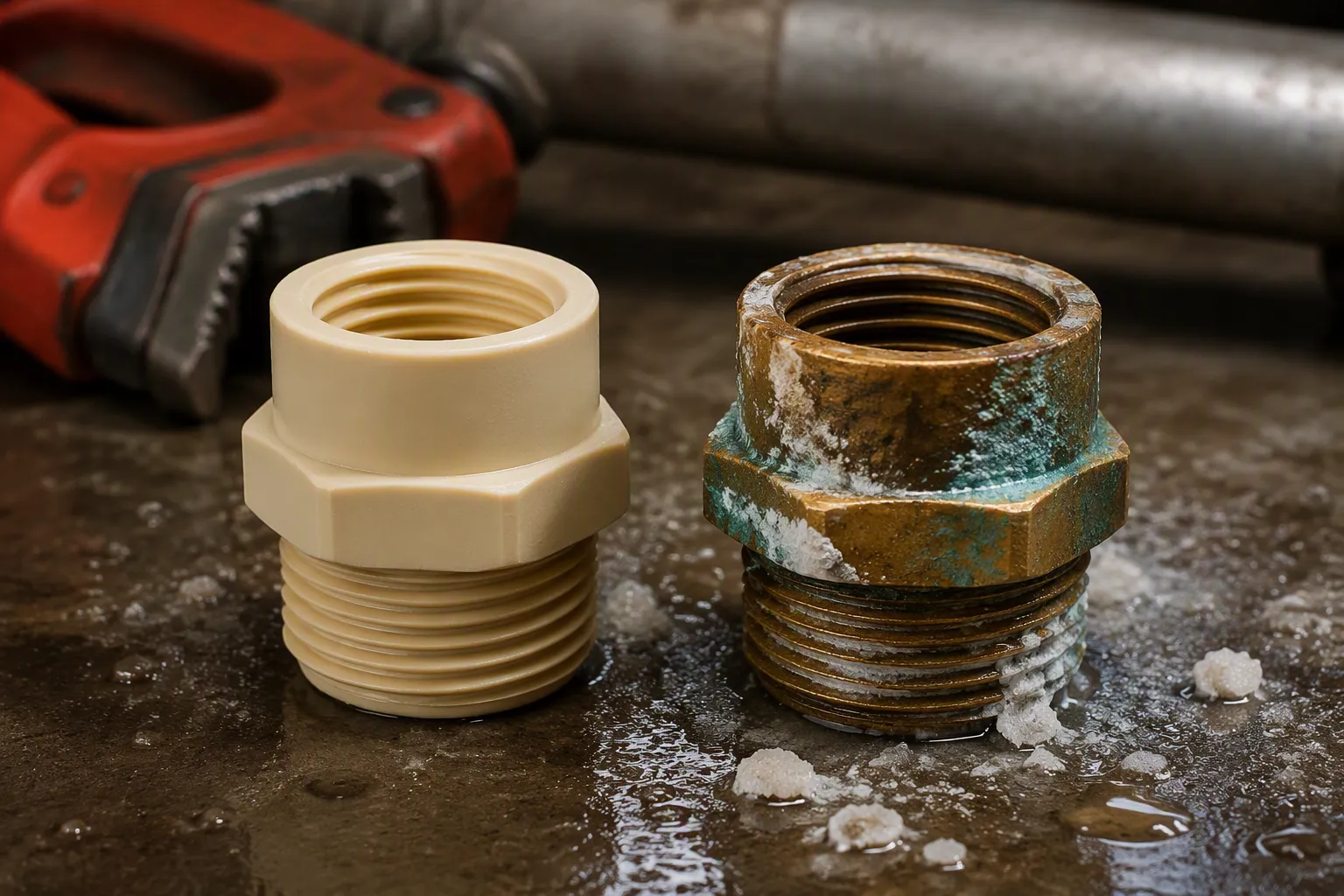
PPSU fittings deliver a decisive advantage in challenging water environments. The polymer structure resists chemical interactions with dissolved minerals and soil-based compounds. Hard water with high mineral content will not cause surface scaling or internal degradation. Connection points remain structurally sound throughout their service life.
Your domestic hot water system benefits directly from this resilience. PPSU fittings operate reliably at 180°F (82°C) continuously. Testing at 70°C demonstrates a lifespan exceeding 20 years. This performance surpasses PEX at 10-15 years and CPVC at 8-12 years. With proper installation, you can expect 50+ years of service. That duration matches or exceeds the lifespan of most residential buildings.
PEX PPSU fittings can last for decades without significant wear or degradation, and the PPSU material withstands temperatures up to 180°C (356°F) without losing strength or structural integrity.
The following comparison illustrates how PPSU handles aggressive water conditions:
|
Property |
PPSU (Plastic) |
Brass |
|---|---|---|
|
Scale buildup resistance |
High – resistant to scale buildup |
Lower – susceptible to corrosion over time |
|
Corrosion resistance |
High – resists corrosion |
Moderate – corrodes in acidic or high-chlorine water |
|
Suitability for hard water |
Ideal for high mineral content |
Less ideal; prone to degradation |
|
Structural integrity |
Stable under normal conditions |
Stronger but can fail due to corrosion |
Brass's Vulnerability to Corrosion and Water Quality
Brass fittings face a specific failure mechanism called dezincification. Zinc dissolves from the alloy, leaving a porous copper structure. This process weakens the fitting and eventually causes leaks. The ISO 6509 standard governs testing for this vulnerability. Minor alloying additions of arsenic, antimony, or phosphorus prevent dezincification in brasses with zinc content up to 36%. Above that threshold, beta phase formation negates any protective effect.
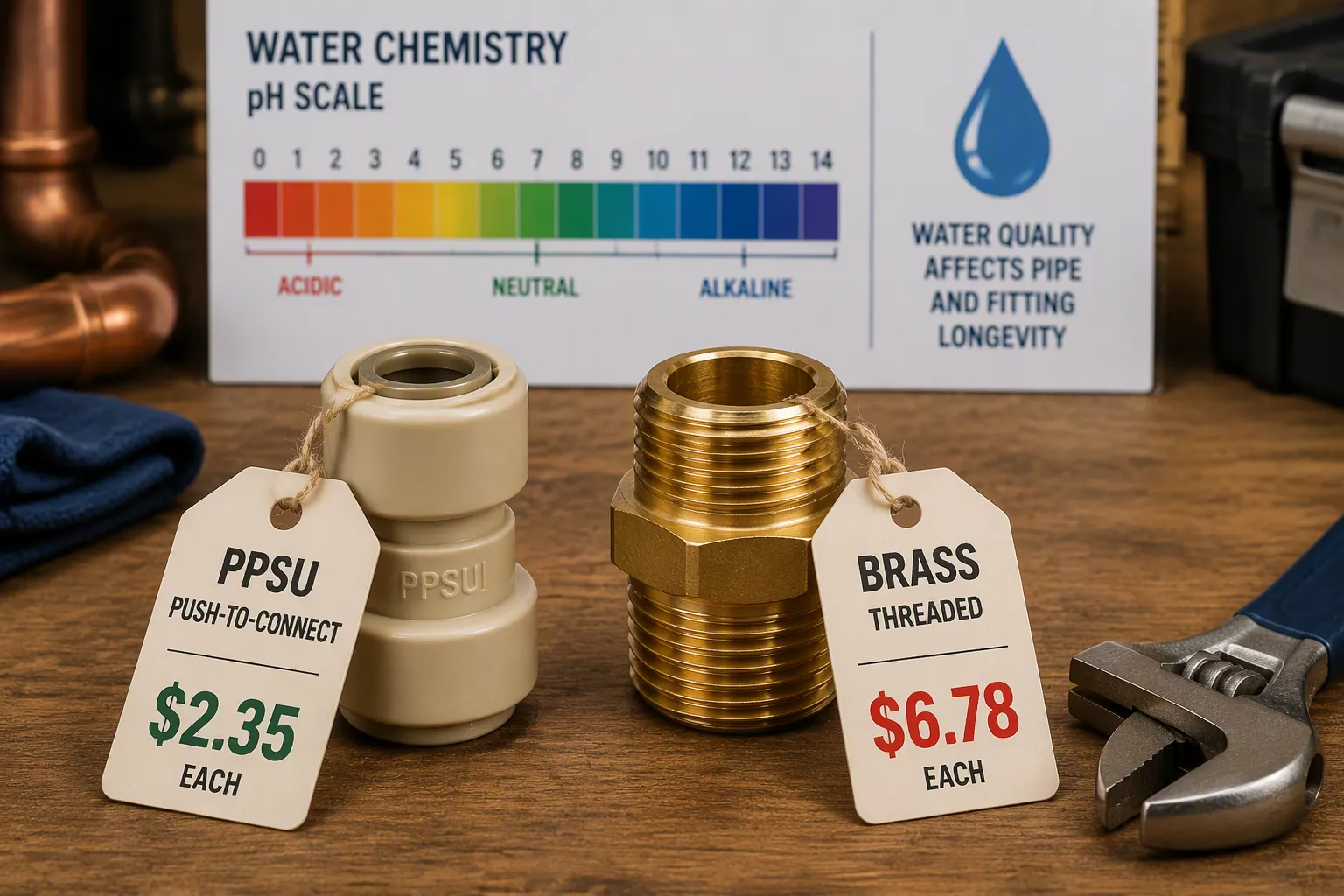
Your water chemistry determines the corrosion risk. The pH level directly influences how brass behaves:
|
pH Range |
Corrosion Type/Effect |
|---|---|
|
Below 6.5 |
Uniform corrosion (highly corrosive due to hydrogen ion concentration) |
|
6.5 – 8.0 |
Pitting corrosion (more localized attack) |
|
Above 8.0 (with alkalinity) |
Protective scale formation possible if LSI is slightly positive |
Acidic water below pH 7 triggers dezincification most aggressively. The EPA recommends adjusting pH so the Langelier Saturation Index sits slightly positive. This typically means slightly alkaline water above pH 7. However, highly alkaline conditions create scale deposits that restrict flow and cause blockages.
Corrosion products can also affect your water quality. Metallic taste often signals active corrosion. Lead content in some brass alloys poses additional concerns for potable water systems. These factors make brass fittings less predictable in regions with variable water chemistry.
The durability comparison between PPSU vs brass fittings ultimately depends on your local water conditions. For homeowners seeking the best plumbing fittings material, PPSU offers maintenance-free longevity. Brass provides mechanical strength but demands careful water quality monitoring. Your choice of durable pipe connection system should account for these corrosion dynamics.
Temperature, Pressure, and Installation
Comparing Temperature and Pressure Ratings
Temperature and pressure ratings define the safe operating envelope for any plumbing fitting. PPSU fittings carry a maximum pressure rating of PN20 (150 psi). Brass reaches PN25 (200 psi). The higher brass rating supports installations near pressure vessels or commercial systems where pressure spikes occur. For standard residential plumbing, both ratings exceed typical requirements.
Continuous temperature ratings also differ between the two materials. PPSU handles 95°C continuously per standard ratings. The ASTM F877 standard provides a higher rating for the material itself:
The material is capable of continuous service temperatures up to 180°C (356°F).
Brass extends to 120°C continuous. This higher rating makes brass suitable for high-heat applications like boiler connections where temperatures exceed typical residential hot water. You should verify your system temperature before selecting fittings.
|
Property |
PPSU |
Brass |
|---|---|---|
|
Maximum pressure rating |
PN20 / 150 psi |
PN25 / 200 psi |
|
Continuous temperature rating |
95°C |
120°C |
|
Coefficient of thermal expansion |
5.5 × 10⁻⁵ /°C |
1.7 × 10⁻⁵ /°C |
Thermal expansion affects long pipe runs significantly. PPSU expands at 5.5 × 10⁻⁵ /°C. Brass expands at 1.7 × 10⁻⁵ /°C. The lower expansion rate of brass means less movement in straight sections. You need fewer expansion loops with brass fittings. This factor matters most in long horizontal runs where pipe movement can stress connections over time.
Ease of Installation and Connection Methods
PPSU Fittings simplify installation considerably. Push-to-connect and press-fit systems require no special tools. You insert the pipe, press the fitting, and the connection seals instantly. This simplicity appeals to DIYers and reduces labor time for professionals. No soldering or threading means fewer opportunities for mistakes during installation.
Brass demands more skill and specialized equipment. Threaded connections require precise cutting, Teflon tape, and careful tightening to avoid leaks. Soldering needs a torch, flux, and steady hands. Crimping requires a dedicated tool and proper calibration. Each method introduces potential error points and increases installation time significantly.
The lightweight nature of PPSU reduces fatigue during overhead work. Brass fittings weigh significantly more, straining wrists and arms during extended installation sessions. For homeowners evaluating the best plumbing fittings material, the ease of PPSU installation often tips the scale toward this modern option. The reduced labor cost also makes PPSU an attractive choice for budget-conscious projects.
Cost Analysis and Key Selection Factors
Cost Comparison: Initial Price vs. Lifespan
PPSU Fittings typically cost nearly half the price of equivalent brass components. This price difference affects your project budget immediately. A 2,000-square-foot residential build saves 15% to 25% on material expenses by choosing PPSU over brass. Those savings compound with reduced labor costs. PPSU push-to-connect systems install faster than threaded or soldered brass connections. The lightweight nature of PPSU also reduces shipping and handling expenses compared to heavier brass alternatives.
Lifespan considerations balance the initial price gap. PPSU fittings deliver 50+ years of service in standard residential conditions. Brass fittings match or exceed this duration but require favorable water chemistry to do so. The total cost of ownership favors PPSU for most homeowners. The best plumbing fittings material for budget-conscious buyers is PPSU, provided the application does not demand extreme temperature or pressure tolerance. Evaluating PPSU vs brass fittings requires looking beyond the price tag to consider long-term maintenance costs.
Factors to Consider for Your Specific Project
Your local water quality determines the safe operating range for brass fittings. The table below outlines the parameters that influence corrosion risk:
|
Parameter |
Safe / Low Risk Range |
Unsafe / High Risk Range |
Recommended Action |
|---|---|---|---|
|
pH |
7.0 – 8.5 (neutral to slightly alkaline) |
Below 6.5 or above 9.0 |
Use neutralizing filter for low pH; always select DZR brass |
|
Hardness |
Moderately hard (protective scale forms) |
Very soft water |
DZR brass is essential in soft water areas; hard water adds natural protection |
Water chemistry directly controls dezincification rate. DZR brass performs best at pH 7–8.5 with moderate hardness (which forms a protective scale) and low chloride. Extreme pH or very soft water will challenge even resistant alloys over decades.
Your budget shapes the material choice. PPSU fittings offer lower upfront cost and reduced installation labor. Brass demands higher initial investment but delivers proven mechanical strength for demanding applications. Calculate your total project cost including materials, labor, and potential future replacements.
Your installation skill matters. PPSU push-to-connect systems allow DIY installation without specialized tools. Brass connections require soldering, threading, or crimping experience. Professional plumbers handle brass efficiently, but homeowners face a steeper learning curve.
Your specific application guides the final decision. Underground PEX B installations benefit from brass fittings due to their superior crush resistance. Exposed connections in mechanical rooms also favor brass for its durability against accidental impact. PPSU Fittings excel in standard wall cavities and crawl spaces where corrosion resistance matters most.
Reputable brands like TOP AQUA offer both PPSU and brass options. A durable pipe connection system combines both materials where each excels. Matching the fitting material to the specific environment ensures long-term reliability.
PPSU vs. Brass: A Quick Reference Comparison Table
This table distills the PPSU vs brass fittings analysis into a scannable format. You can reference it during material selection or when discussing options with a contractor. Each attribute reflects the detailed evidence presented throughout this guide.
|
Attribute |
PPSU Fittings |
Brass Fittings |
|---|---|---|
|
Corrosion Resistance |
Complete immunity to corrosion, rust, and scaling |
Susceptible to dezincification in acidic or high-chlorine water |
|
Temperature Rating |
95°C continuous rating |
120°C continuous rating |
|
Pressure Rating |
PN20 / 150 psi |
PN25 / 200 psi rating |
|
Ease of Installation |
Push-to-connect or press-fit; no special tools required |
Requires soldering, threading, or crimping with specialized equipment |
|
Initial Cost |
Approximately half the cost of equivalent brass components |
20% to 40% higher per unit |
|
Long-Term Value |
50+ years of maintenance-free service in standard conditions |
Matches PPSU lifespan only with favorable water chemistry |
|
Best Use Case |
Residential wall cavities, crawl spaces, hard water regions |
Underground PEX B, boiler connections, high-impact areas |
Manufacturer certifications confirm PPSU's capability for standard residential service. PPSU press fittings are rated for a maximum working temperature of 95°C and a maximum working pressure of PN20 (150 psi). These figures cover both hot and cold water applications. Brass extends to 120°C continuous, which explains its specification for boiler connections and high-heat environments.
Your selection of the best plumbing fittings material depends on matching these attributes to your project conditions. PPSU delivers superior corrosion resistance and lower cost. Brass provides higher temperature tolerance and mechanical strength. Neither material outperforms the other across every category.
A durable pipe connection system combines both materials strategically. Use PPSU for standard wall installations where water chemistry poses corrosion risks. Specify brass for underground runs or mechanical rooms where impact resistance matters. This hybrid approach maximizes the strengths of each material while minimizing their respective limitations.
Your PPSU vs brass fittings decision ultimately hinges on project priorities. Choose PPSU for corrosion immunity, simpler installation, and lower cost. Select brass for extreme temperatures or underground durability. No single best plumbing fittings material exists. Evaluate your water chemistry, budget, and skill level. Consult a local plumber or trusted brands like TOP AQUA to finalize your durable pipe connection system.
FAQ
How Long Do PPSU Fittings Actually Last?
PPSU fittings deliver 50+ years of service in standard residential conditions. Testing at 70°C demonstrates a lifespan exceeding 20 years. This duration matches or exceeds most building lifespans, making PPSU a genuinely durable pipe connection system.
Can You Mix PPSU and Brass Fittings in One System?
Yes. Many professional installations combine both materials strategically. Use PPSU in wall cavities where corrosion resistance matters. Specify brass for underground runs or boiler connections requiring higher temperature tolerance. This hybrid approach maximizes each material's strengths.
Do PPSU Fittings Meet Plumbing Code Requirements?
PPSU fittings carry PN20 pressure ratings and 95°C continuous temperature ratings. These specifications satisfy standard residential code requirements. Always verify local code compliance before installation. Manufacturers like TOP AQUA provide certification documentation. This makes PPSU the best plumbing fittings material for most residential applications.