How to Choose Valves Used for High Temperature Conditions?

The high-temperature conditions here refer to the conditions when the medium temperatures are equal to or higher than the starting creep temperatures of the metallic materials. The creep temperature of carbon steel is about 400℃; chromium molybdenum alloy steel 450℃; austenitic iron-based high-temperature alloy steel 540℃; nickel-based high-temperature alloy 650℃; aluminum alloy 200℃; titanium alloy 310℃.

Under high-temperature conditions, thermal expansion and contraction will happen on both the metal and non-metallic materials, which will have an impact on the sealing performance of the valves. The thermal expansion compensation structures of the butterfly valves and the treatment of the gate valves' clacks to prevent clipping tightly are to eliminate the adverse effects of thermal expansion and contraction.

When we choose the valves used for high-temperature conditions, we should give consideration to the following principles.

The types of valves
We should first choose valves which have the valve discs with good thermal expansion compensation performance. The thermal expansion compensation capacity of the commonly used shut-off valves from high to low is: globe valves, gate valves, ball valves, mechanically balanced plug valves, metal sealed butterfly valves.

When the medium temperatures exceed the starting creep temperatures of the bolts' materials, it is not recommended to use the wafer butterfly valves and the check valves.

When the non-metallic seal is adopted, attention should be paid to the operating temperatures of the non-metallic materials. We can consult the valve manufacturers about the specific operating temperature range of the materials.

The structures of valves
When the gate valves are selected, we should consider the possibility of the valve clacks being clipped tightly. Therefore, we should select gate valves with elastic valve clacks when the gate valves of DN50 and above DN50 are decided to be used.

Welding connections are not emphasized to be adopted in the simple high-temperature environments and they will be recommended if the high-temperature conditions are combined with the pressure and then causes the nominal pressure rating of valves higher than or equal to Class600 (for Class series) or PN100 (for PN series). Welding connections will also be recommended if the high-temperature conditions are combined with the flammable media and the temperature of the media exceeds the spontaneous ignition points and flashpoints of media.

The bypass should be set on the valves used for high-temperature steam (3.5 Mpa and above) pipelines or other pipelines considered by the engineering designers that they can not withstand thermal shocks.

The materials of valves
For the pressure components of valves, manufacturers should be required to have creep tests on materials, to provide the data of type tests, and to improve their quality control of materials, including the control of surface defects, internal defects, and non-metallic inclusions.

When the temperatures of the media are higher than the starting creep temperatures of the bolts' materials, the adverse effects of possible stress relaxation of the bolts on the sealing performance of the valve bonnets should be evaluated. Replace the materials with those of higher creep temperatures, or take other measures if necessary.

As the non-synchronized thermal expansion of the valve components may create an additional force on the sealing parts, the hardening treatment should be had on the sealing surfaces of the valve clacks and the valve seats.

The effects of high-temperature conditions on the accelerated aging of the stem packing should be evaluated. If necessary, replace the materials with better ones, or take appropriate measures.
Intro to Lug and Wafer Type Butterfly Valve

Butterfly valves have been around for a long time and are used in a variety of applications. They made their debut in the 1930's and have been used in several industries ever since. There are several different types of butterfly valves, but they fall into two basic types - lug valves and wafer valves.


A butterfly valve is recognized as a "quarter-turn" valve. The valve is designed to open or close when the metal disc rotates a quarter turn. The disc is connected with the stem. When the butterfly valve is fully open, the disc rotates (1/4 turn), allowing almost unimpeded flow of fluid.


Lug butterfly valve

The lug butterfly valve’ design is similar to a three-piece ball valve, as one end of the line in it can be removed without affecting the other side. This can be performed by threaded inserts, flanges, and two sets of lugs (bolts) that do not use nuts, as each flange has own bolts. It's also salient to note that you can clean, inspect, repair or replace the lug butterfly valve i line without interfering the whole system, but, by the way, you'll need to do it when it comes to Wafer valves.


Wafer butterfly valve

A wafer butterfly valve is utilized to secure a seal to defend dual-directional pressure differential in the flow. This is achieved by the use of tight fit seals such as precision machined O-rings, washers, and flat valve surfaces on the downstream and upstream parts of the valve.


After all, lug and wafer butterfly valves both are now used in lots of applications for industrial sectors that include food processing, pharmaceutical, chemical, oil, water as well as sewage management.


Knife Gate Valve vs. Gate Valve

The biggest difference between a knife gate valve and a flanged gate valve is that gate valve is manufactured according to ANSI , while knife gate valve meets TAPPI Standards. Gate valves are also flanged, wider in size, ANSI pressure rated, and their API leak tightness standards need to be met as well. Gate valves are bi-directional, widely used in fluid applications, and they only come with metal seats. Another difference between a knife gate valve and an ANSI gate valve is in the packing gland area. Knife gate valves have a V-shape packing group that is sealed to the shaft of the gate valve. Knife gate valves have a packing gland area that is sealed around the gate.


Knife gate valves have a thinner structure compared to ANSI gate valves. Knife type gate valves are primarily unidirectional (some are bi-directional) and feature a lug or wafer body with no flanges. Knife gate valve seats vary from resilient to metal versions.


The most significant advantages of knife gate valves are weight (16 inches, usually less than 300#) and cost.ANSI gate valves are usually more than 1200#, and more expensive.

The working of ball valve

Ball valves are usually found in controlling the flow of high-weight fluids and gas lines. This is because that these valves don’t reduce the flow weight and limit liquid flow. Ball valves are dominantly put in where the supply pipe’s internal breadth is 6 inches or less.


A ball valve is a valve used to divert the flow. When open, it gives access to the medium and when closed, it cuts off the medium. It is named ball valve because of the ball-shaped disc in its cavity.

They are used in many fields because they are easy to repair and able to bear weight and temperature. Ball valves can withstand to 10,000 pounds per square inch and up to 200 degrees Celsius. Ball valves range from quarter-inch to one foot wide or larger.


Types of Ball Valve

There are various kinds of ball valves. The path of the full-bore valve is as same wide as the pipe the valve appended to. This design prevent the flow being impeded. On the contrast, The reduced-bore valve has opening on the ball that is narrow than the pipe. This makes less water stream. A trunnion mounted valve has a pin holding the ball so it doesn't vibrate. There are three- and four-path valves, too. With these valves, the flow is controlled by the position of the ball.


Efficiency

A Dervos ball valve can offer you the perfect seal. There won’t be any spillages when the ball valve are totally shut-off. Because of its extremely straightforward structure, ball valves are more modest and lighter contrasted with other types of valves. Ball valves owns delicate seals which make it simple. What’s more, comparing with all sorts of valves, ball valves boost the most modest level of liquid safety.

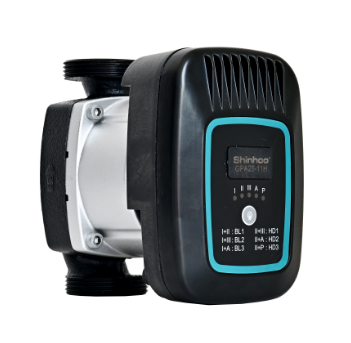
How Shinhoo GPA Series Boiler Pumps Improve Efficiency & Performance

Heating systems are a crucial part of home comfort, but inefficient pumps can lead to higher energy bills, uneven heating, and unnecessary wear and tear. That’s where the Shinhoo GPA Series gas boiler pump comes in—engineered to maximize efficiency, enhance performance, and reduce costs.

Let’s explore how this advanced pump optimizes your heating system while saving energy and money.


1. Smart Adaptive Control for Optimal Efficiency

The GPA Series features intelligent gear adjustment, allowing the pump to automatically adapt its operation based on real-time heating demands.

  • Max/PWM Modes: Switch between maximum power and PWM (pulse-width modulation) for precise control.

  • Energy Savings: Adjusts speed to match load conditions, eliminating wasteful energy consumption.

  • Seamless Integration: Works with your boiler to maintain consistent performance without manual intervention.

"Why run at full power when you don’t need to? The GPA Series ensures your pump only uses the energy required."


2. Significant Energy & Cost Savings

One of the biggest advantages of the GPA Series is its outstanding energy efficiency:

  • Low Operating Cost: At 1m³/h flow rate, it consumes only 7.38 EUR in electricity over a 4-month heating season.

  • Long-Term Savings: Households can save up to 9.65 EUR per year—imagine the impact if 2 million homes switched to GPA pumps (293.76 million kWh saved annually!).

This makes it a smart investment for both homeowners and HVAC installers looking for eco-friendly, cost-effective solutions.


3. Enhanced Comfort with Real-Time Feedback

Nobody likes cold spots or sudden temperature drops. The GPA Series ensures stable heating and hot water by:

  • Providing real-time data (speed, flow rate, power) to your boiler for precise adjustments.

  • Eliminating temperature fluctuations, keeping your home consistently comfortable.

"A smooth, quiet, and reliable pump means no more surprises—just perfect warmth when you need it."


4. Built to Last: 8 Self-Protection Features

Mechanical failures can be costly. The GPA Series includes advanced protection mechanisms to extend pump life:

✔ Over-voltage & under-voltage protection
✔ Over-current & phase loss detection
✔ Light load & stalled rotor prevention
✔ Over-temperature & overheating safeguards

These features reduce hydraulic shocks, minimize wear, and prevent breakdowns, ensuring longer service life with fewer maintenance issues.


5. Compact Design for Easy Installation & Maintenance

  • Space-saving: Measures just 151mm (H) x 93mm (W), fitting seamlessly into tight spaces.

  • User-friendly: Front-mounted control panel for quick adjustments.

  • Simplified servicing: Easy access for maintenance and repairs.

Whether you're a homeowner or an HVAC professional, the GPA Series is designed for hassle-free installation and operation.


6. Eco-Friendly Heating for a Sustainable Future

By reducing energy waste, the GPA Series helps:
✅ Lower carbon footprint
✅ Decrease household electricity consumption
✅ Support global energy-saving initiatives


With millions of potential installations, the environmental impact is substantial—293.76 million kWh saved per year if adopted widely.


Upgrade to Shinhoo GPA Series for Smarter Heating


The GPA Series gas boiler pump isn’t just another component—it’s a high-efficiency, long-lasting solution that cuts costs, improves comfort, and protects the planet.

How To Assemble Mega S Circulation Pump

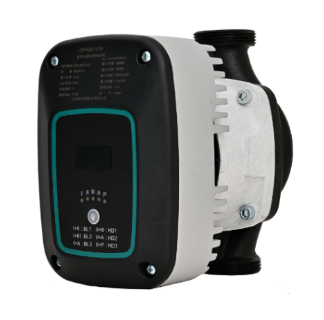
Water circulation systems demand reliability, energy efficiency, and intelligent protection—and Shinhoo Mega S Circulation Pump delivers on all fronts. Whether for industrial, commercial, or high-performance residential applications, this pump is engineered for durability, precision control, and hassle-free operation.  

 Why Choose  Shinhoo Mega S Pump?  

✅ Built for Safety & Longevity  

✔ A3 Level Explosion-Proof – Safe for hazardous environments  

✔ 10-Year Design Life – Robust construction for extended service  

✔ H-Class Motor Insulation – Withstands extreme temperatures  

✔ High-Performance Bearing Coating – Reduces wear and tear  


✅ Energy Efficiency & Quiet Operation  

✔ High Efficiency & Energy Saving – Optimized for reduced power consumption  

✔ Low Noise (≤45dB) – Smooth operation without disruptive sound  


✅ Smart Control & Versatility  

✔ 10-Stage Temperature Control – Adjustable thermal management  

✔ 4 Internal Modes + 3 External Control Options – Supports Auto, Constant Speed, Proportional Flow, Constant Pressure, and Temperature Control  

✔ 0-10V, Modbus, 4-20mA, and Temp Control Interfaces – Seamless integration with automation systems  


✅ 8 Self-Protection Functions for Maximum Reliability  

The pump automatically detects and responds to:  

- Overvoltage / Undervoltage  

- Overcurrent / Phase Loss  

- Light Load / Locked Rotor  

- Overtemperature / Overheat  

LED indicators provide real-time fault alerts, ensuring quick troubleshooting. 

Key Installation Guidelines  

- Mount horizontally only (±5° tolerance) – *Never install vertically!*  

- Rotate the terminal box 90° if needed for wiring convenience  

- Use included gaskets & O-rings for leak-free sealing  

- Tighten screws diagonally to prevent uneven pressure on flanges  

Critical Pre-Startup Checks  

1. Always ground the pump for electrical safety.  

2. Connect an external power switch for easy control.  

3. Open valves and purge air from pipes before first use.  

4. Avoid overtightening screws to prevent flange damage.  

Control Modes & Gear Adjustment  

- Button 1 – Switches between Auto, Constant Speed, Proportional, Constant Pressure, and Temp Control modes.  

- Button 2 – Adjusts gear settings (default: Gear 3).  

  - In Temperature Control Mode, press to cycle through Gears 4-10.  

Fault Indications (LED Flashing Patterns)  

| Flashes | Protection Mode | Action Required |  

| 1 Flash | Overvoltage | Restart after voltage stabilizes |  

| 2 Flashes | Undervoltage | Restart after voltage recovers |  

| 3 Flashes | Overcurrent | Auto-restart after 8s (5 attempts) |  

| 4 Flashes | Phase Loss | Check wiring, then restart |  

| 5 Flashes | Locked Rotor | Auto-restart after 8s (5 attempts) |  

| 6 Flashes | Light Load | Verify load compatibility |  

| 7 Flashes | Overtemperature | Cool down before restarting |  

Shinhoo Mega S Circulation Pump combines industrial-grade durability, smart automation, and energy-saving efficiency in one compact unit. With multiple control modes, self-diagnostic alerts, and easy installation, it’s the ideal choice for:  

- HVAC systems  

- Industrial cooling circuits  

- Water supply & pressure maintenance  

- Temperature-regulated applications  

 Upgrade to the Mega S Pump today and experience unmatched reliability!  


Instant Hot Water at Your Fingertips Meet Shinhoo SPA15-12E Instant Hot Water Pump

Tired of waiting for hot water every time you turn on the faucet? Say hello to Shinhoo SPA15-12E Instant Hot Water Pump, the ultimate solution for instant hot water and a more comfortable, efficient lifestyle.

Hot Water Instantly

With Shinhoo SPA15-12E, the moment you turn on the faucet, hot water flows instantly. No more waiting for the water to heat up, whether it’s for your morning shower, washing dishes, or any other daily task. This circulation pump ensures that hot water is always ready when you need it, delivering unparalleled convenience and comfort.

Intelligent Constant Temperature

Say goodbye to fluctuating water temperatures! Shinhoo SPA15-12E features intelligent constant temperature control, ensuring that the water stays at your desired temperature throughout use. Whether it’s a relaxing bath or a quick hand wash, you’ll enjoy a consistent and comfortable experience every time.

Energy-Saving and Efficient

Designed with energy efficiency in mind, Shinhoo SPA15-12E minimizes energy waste while delivering top-notch performance. Its advanced technology ensures that you get hot water quickly without excessive energy consumption, making it an eco-friendly and cost-effective choice for your home or business.

Comfort Without Waiting

Why wait for hot water when you can have it instantly? Shinhoo SPA15-12E transforms your daily routine by eliminating the frustrating delays of traditional water heating systems. Enjoy the luxury of instant hot water and make every moment at home more comfortable and convenient.

Perfect for Any Setting

Whether it’s for residential use or commercial applications, Shinhoo SPA15-12E is designed to meet your needs. Its compact design, reliable performance, and user-friendly features make it the ideal choice for anyone looking to upgrade their hot water system.

Upgrade Your Lifestyle Shinhoo SPA15-12E

Shinhoo SPA15-12E Instant Hot Water Pump is more than just a device—it’s a lifestyle upgrade. With instant hot water, intelligent temperature control, and energy-saving efficiency, it brings comfort and convenience to every corner of your life.

Don’t wait any longer for hot water. Choose Shinhoo SPA15-12E and experience the future of instant, comfortable, and efficient living today!

Is It Worth Getting A Heat Pump?

Yes. Heat pumps are a great way to save money on energy costs. They are also more efficient than traditional heating systems, so they can help reduce your carbon footprint. Heat pumps can also provide both cooling and heating in one unit, making them a great all-in-one solution for your home.
GPA II CV&AUTO series motor pump has the permanent magnet motor and the different pressure controller, which can continuously adjust pump performance to meet actual requirements of the system.  It is mainly applied to home heating and water circulation in domestic hot water system.
The best system met GPA Series circulator pump,following:
·the constant and variable flow heat system
·the heat system of variable flow heat system
·the air-conditioning system
·the industrial circulation system

·the home heating and living water system

GPA II CV&AUTO series motor pump

Shinhoo GPA-H Pump Will Be Unveiled On The 133nd Canton Fair will open on April 15

Guangzhou, a commercial capital over thousand years
All merchants draw together like clouds
The 133nd Canton Fair will open on April 15

Shinhoo GPA-H pump will be unveiled

We sincerely invite purchasing representatives to attend the fair
and explore more possibilities of pumps together with us

Welcome to Hall 17.2, booth F33-36, G13-16

Hall 18.2, booth B32-33,C16-17

We are waiting for you

Shinhoo products pre-empt the prophet
GPA-H series heat pump system dedicated pump, seamless switching between cooling and heating.
(1) Integrate multiple control methods (PWM, Lin, 0-10V, etc.);
(2) With multiple functions (power feedback, speed feedback, flow feedback, head feedback, etc.);
(3) Various styles (MAX file + PWM file, multi-file + PWM file, PWM file);
(4) Full coverage of performance (flow 0-1Om³/h, head 4-17m).

The Difference between Booster Pump and Circulating Pump

As the name implies, booster pumps and circulating pumps have different performances . They have their own characteristics for obvious differences in terms of installation location, scope of application, operation and control.


From the perspective of installation location, the booster pump is generally installed on the inlet pipe; the circulating pump needs to be installed on the return pipe.


From the point of view of the scope of application, booster pumps are generally used in central heating systems, where the water pressure is small due to the small drop with solar energy, and the water pressure of the water heater is small, and the pressure needs to be boosted; the circulating pump is mainly for self-heating users, or the heating system of large and medium-sized households circulates, and the floor heating hot water is circulated.


From the perspective of boosting strength, booster pumps mainly solve the problem of lower water pressure, which is a type of pump with lower pressure; and the circulating pump has a higher pressure than the booster pump, which can drive the circulation of the entire heating system.


From the perspective of product operation, the booster pump is mostly automatically controlled; the circulating pump is mostly manually controlled.


Shinhoo, a company specializing in the manufacturing of canned pumps, launched a new upgrade of cooling and heating dual-purpose high efficiency circulation pumps (GPA-H series) --- 11H, 17H, which can be easily installed and operated.


11H, 17H are equipped with Self Adapting mode AUTO(default setting). Pump runs once the power is connected and adapts its perfomance according to the actual system needs. At the same time, the exterior of the electric pump has a digital pulse-width modulation (PWM) function to control the motor speed to meet the different flow requirement of the various system. 

The running noise of the electric pump is as low as 42dB(A), bringing a new comfortable experience to your family. The electric pump comes with over-voltage and over-current protection to prevent the danger of burning out during use. The minimum energy consumption can reach 5W, and the EEI≤0.20-Part3 meets the requirements of the latest ERP2015, allowing you to use it with a low-carbon lifestyle and feel at ease.