Three-dimensional layout of automotive high voltage wiring harness

As a key component of new energy vehicles, the three-dimensional layout of high-voltage wiring harnesses directly affects the performance, safety and reliability of vehicles. Reasonable three-dimensional layout can ensure the stability of the wiring harness, easy assembly and maintenance, while improving the overall efficiency of the vehicle.


1 Classification of high voltage wiring harness

1.1 Charging wiring harness

1. Fast charging harness: The fast charging wiring harness is specially connected to the fast charging port and high voltage battery, and its mission is to achieve the rapid supplement of electric energy.

2. Slow charging harness: Slow charging harness is used to connect AC charging ports and high-voltage batteries. In home charging piles or some low-power AC charging scenarios, slow charging harness plays an important role.

1.2 Power cable harness

The power cable harness connects the battery and the motor, which can be called the "highway" for the power output of new energy vehicles.

Among them, the motor controller cable is an important part of the power harness, which connects the high voltage box and the motor controller, the motor controller is responsible for adjusting the speed and torque of the motor, and the motor controller cable bears the high voltage transmission of the battery to the motor controller, and then the motor controller is assigned to the motor.

1.3 High voltage accessory wiring harness

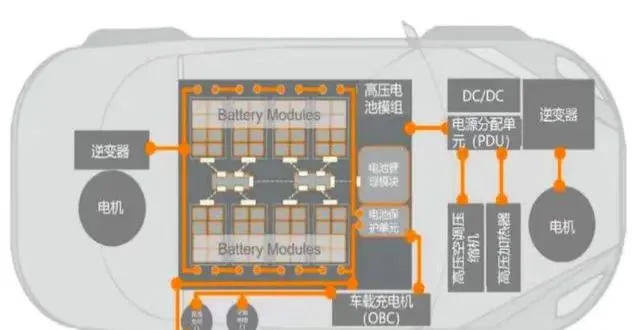
The high voltage accessories cable harness connects the high voltage PDB to other high voltage components.

For example, to provide high voltage for the air conditioning compressor, so that the air conditioning system can normal cooling or heating, in the hot summer to bring cooling to the car, in the cold winter to create a warm environment;

Power accessories such as PTC heaters (positive temperature coefficient thermistor heaters) for functions such as window defrosting and seat heating.

2 High-voltage wiring harness three-dimensional layout design process

2.1 High voltage harness development process

Before introducing the 3D design process of high voltage wiring harness, it is necessary to talk about the overall development process of high voltage wiring harness, as shown in the following figure. The key is to understand what needs to be done before three-dimensional wiring.


2.2 High voltage wiring harness 3D design process

The 3D design process of high voltage wiring harness requires the help of professional software, such as CATIA, Proe, UG, solidwork, etc. Overall, the 3D design process for high voltage wiring harnesses is as follows:

1. Electrical equipment layout

The first step in the three-dimensional layout of high-voltage wiring harnesses is the layout of high-voltage electrical equipment, which requires the chief layout engineer to take the lead and complete with the engineers of each system.


The whole vehicle electrical system is divided into different modules according to the position, such as chassis, instrument panel, engine, transmission and other modules. In the layout process, it is necessary to consider the actual location of each electrical equipment, such as drive motor, power battery, PTC heater, compressor, DC/DC, battery, etc., but also to identify the DC/DC, power battery, distribution box control components concentrated location.

2. Wiring direction design

Determine the wiring direction according to the electrical equipment layout plan.

When determining the direction of wiring harness, it is necessary to design according to the principle of automotive electrical wiring harness layout, and check the direction scheme to ensure its rationality. For example, the high-voltage wiring harness is directed inside the vehicle skeleton, which helps to protect the harness and improve the safety and reliability of the harness.


3. Fixed mode and structure design

The fixing method is determined according to the direction of the wire harness, and the strength and interference are checked.

When designing the fixed method and structure, assembly should be considered, and too many processes should not be added to the assembly process while pursuing fixed reliability. In the design process of wire harness fixed structure, common standard parts are used as far as possible, and the types of standard parts are as few as possible to reduce the use of special tools in assembly and maintenance.


4 Principles of three-dimensional layout of high-voltage wiring harnesses

4.1 Proximity principle

The principle of proximity of wiring harnesses means that the path of high voltage wiring harnesses of new energy vehicles should be reduced as much as possible when arranging high voltage wiring harnesses. This not only avoids the pressure drop caused by too long path, but also conforms to the design concept of reducing cost and weight.

4.2 Easy Assembly

The overall design and fixing method of automobile wiring harness should adhere to the principle of easy assembly to ensure simple installation and operation.

Fixed connector installation: Reserve the length of the fixed connector installation to ensure sufficient installation space for easy operation.

Fixing of wiring harness and its components: Leave a safe space for fastening tools, with a gap of at least 50mm from the center of the nut.

Installation and fixing of wire harness fasteners: The installation and fixing of wire harness fasteners should be selected in a suitable position and the number should be as small as possible.

4.3 Good maintainability

The principle of good maintainability means that the convenience of late maintenance management should be fully considered in the arrangement of the automotive wiring harness, to ensure that once the wiring harness fails, it can be repaired in the shortest time, and effectively avoid the impact of maintenance on other components.

Joint layout and fixing: The joint should be arranged in a place within reach, and the other end of the connector inserted and removed by one hand should be fixed.

Avoid misinsertion and reserved length: The connectors on the same part should be avoided, and the end wiring harness should be reserved length. For example, the high-voltage wire near the tail of the connector should not be bent or rotated, and should be fixed within 120mm or less.

Fuse box harness allowance: The harness of the fuse box should have enough margin so that it can have enough operating space during maintenance.

4.4 Safe and Reliable

Ensuring the safety and stability of the electrical system and ensuring the normal use of automotive electrical equipment is the ultimate purpose of automotive wiring harness layout.

The selection of the fixed position of the cable harness: Generally, the cable is fixed in the area that is not easy to touch, such as edges and grooves, to avoid damage to the cable harness caused by external forces.

Avoid cable bending: Leave enough space when it is necessary to bend, and special fixing must be done to the bending zone, and pay special attention not to damage.

Avoid cable damage: Take special protection on cables that need to pass through holes, such as protective covers or wrapping tapes, to prevent cable wear. In the event of a collision, ensure that the wiring harness is not squeezed to prevent the wiring harness from breaking and causing a short circuit.

Reserve a good design margin: for the main branch, the bending radius of the wiring harness should be large enough to avoid too small bending space affecting the wiring harness assembly. When assembling the wiring harness, do not pull it too tight to avoid mispositioning the fixed point of the wiring harness when the driving vehicle is in a bumpy state.

Avoid vibration area: When the high-voltage wiring harness is arranged and fixed, it should avoid violent vibration areas, such as air compressors, water pumps and other vibration sources. When it is impossible to avoid due to structural arrangement and other factors, a high-voltage wire with sufficient margin should be left according to the vibration amplitude of the wiring harness arrangement and the maximum motion envelope of the moving part, so as to avoid the tension or tension of the wiring harness.

Avoid high temperature areas: In the layout of wiring harness should avoid the high temperature parts on the vehicle, such as air compressor, brake pipe, steering oil pump, oil pipe, etc., to avoid high temperature to melt the wire or accelerate aging, resulting in the risk of exposing the core wire and the frame short connection.

Pay attention to the bending radius of the high-voltage wire: pay attention to the bending radius of the high-voltage wire harness when it is arranged. If the high-voltage wire harness is bent too much, the resistance of the bent part of the wire harness will increase, resulting in an increase in line voltage drop. At the same time, excessive bending time for a long time will cause aging and cracking of wire harness insulation rubber. Generally, the minimum inner bending radius of a high-voltage wire should not be less than four times the outer diameter of the wire. The high-voltage cable harness at the tail of the high-voltage connector must be kept straight. The high-voltage cable near the tail of the connector must not be bent or rotated.

Sealing and waterproof design of high voltage cables: To improve the mechanical protection and dustproof and waterproof performance of high voltage wiring harnesses, protective measures such as sealing rings are adopted between the inserted connectors and the positions where the connectors are connected to the cables to prevent water vapor and dust from entering, so as to ensure the sealing environment of the connectors and avoid safety problems such as short circuit, spark, and leakage between the contacts.

4.5 Beautiful Layout

Hidden or horizontal vertical: the wiring harness layout should be beautiful, you can choose to hide or horizontal vertical layout. The direction of the wiring harness should be consistent with the direction of the attachment, in the projection direction, according to the horizontal horizontal vertical arrangement, try to avoid the oblique direction arrangement, avoid cross arrangement, and the surrounding wiring harness, water pipe, gas pipe, oil pipe and other directions as unified as possible, the overall appearance.

5 Precautions for three-dimensional layout of high-voltage wiring harnesses

The three-dimensional layout of high-voltage wire harnesses is a complex and critical process, which requires comprehensive consideration of many factors. In addition to following the basic layout principles, there are the following precautions:

1. The HV wiring harness should be avoided from the passenger compartment as far as possible. If the HV wiring harness needs to be connected to the front compartment and trunk due to design requirements, the HV wiring harness can be routed from under the vehicle chassis through the body sheet metal hole, which is conducive to the EMC design of the HV wiring harness.

2. Avoid wiring with low-voltage wiring harnesses to prevent interference with low-voltage wiring harnesses. Try to avoid cross-wiring with high-low-voltage wiring harnesses 100mm apart from parallel wiring harnesses (unless EMC is not affected);

3. The high pressure wiring harness is separated from the fuel pipe by at least 100mm;

4. The distance between the associated positive and negative wires should be maintained 20mm (measured by the distance from the outer edge of the shield layer);

5. The associated wire length difference is not allowed to exceed 35mm;

6. The gap between the high voltage wiring harness and the stationary parts is at least 10mm;

7. The gap between the high voltage wiring harness and the moving parts is at least 25mm;

8. The distance between the outlet end of the high voltage connector and the first fixed point is not more than 100mm, and the distance between the adjacent fixed points is generally not more than 150 ~ 200mm;

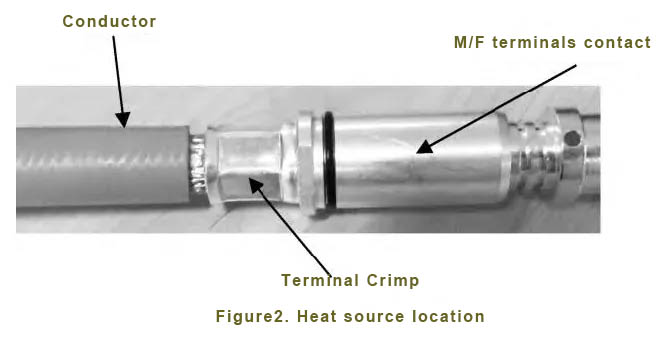
9. The wiring harness should be more than 200mm away from the heat source (such as engine exhaust pipe, pump copper pipe, etc.). If the requirements cannot be met, the wiring harness should be wrapped with flame retardant thermal insulation cotton, or the heat insulation board should be added near the wiring harness.

10. Try to avoid the area with large deformation after the collision of the body to prevent the high voltage of the body from being cut by the sheet metal or the insulation layer from being damaged after an accidental collision. For example, try not to line the front and rear anti-collision beams, side sheet metal and door.

11. The associated high-voltage wiring harnesses (such as the motor three-phase line or the main power battery pack line) must be unified and symmetrically arranged.

12. In the event of a collision, the vehicle must ensure that the high-voltage wiring harness will not be squeezed to prevent the wiring harness from breaking and causing short circuit.

13. The bending radius of the wiring harness should not be too small, which should cause the sealing of the connector to fail and the insulation of the conductor to be damaged. The appropriate bending radius of the wire is shown in the following table.


Note: Outer diameter refers to the diameter of the outermost insulating skin; Some manufacturers of high voltage large square wire bending radius can be less than the above table requirements, need to determine the bending radius and test requirements and methods with the supplier.

6 Summary

In order to do a good job in the 3D design of high voltage wiring harnesses, it is necessary to be familiar with the parts related to the high voltage system, familiar with the development process of high voltage wiring harnesses, master the layout principles related to high voltage wiring harnesses, precautions and 3D design software.

Difference Between Isotropic Magnet and Anisotropic Magnet

Have you heard of isotropic magnets and anisotropic magnets? What are the connections and differences between them? In simple terms, magnetic materials fall into two categories.

One is an isotropic magnet, which has the same magnetic properties in any direction and can be magnetized in any direction.

The other type is anisotropic magnets. Anisotropic magnets have different magnetic properties in different directions. Only the fixed direction has strong magnetic properties. The direction in which it can obtain the best magnetic properties is called the orientation direction of the magnet, and the magnetic field strength in the orientation direction is the largest ,the magnetic field strength in other directions is much smaller. This type of magnet has high magnetic energy after magnetization and can be used for high torque motors.

Let's take the hot NdFeB magnets as an example. Bonded NdFeB magnets are both isotropic and anisotropic; sintered NdFeB magnets are generally anisotropic magnets, because most of them are formed and pressed by magnetic field orientation. We usually say that if there is an orientation process in the production process, it is an anisotropic magnet. In essence, in the process of magnet processing, a magnetic field is added to magnetize to make the molecules form anisotropic. Our factory produces all kinds of office magnets, motor magnets. Whether you are looking for isotropic or anisotropic magnets, we can do it for you.

How to choose the coating of NdFeB magnets?

The coating of NdFeB magnets is to add a protective layer on the surface, which plays the role of anti-corrosion, anti-rust, and prolonging the service life. There are three most common coatings for NdFeB magnets, namely zinc plating, nickel plating, and epoxy coating.

1 In terms of price, galvanized coating is extremely advantageous, and the prices are ranked from low to high as zinc, nickel, and epoxy coatings.

2 After the nickel-plated surface treatment, the corrosion resistance of the magnet is higher, up to 96H salt spray without rusting, while the galvanized coating can only achieve 48H salt spray without rusting. Now the commonly used nickel-copper- Nickel plating method can achieve 120-200 hours of salt spray without rusting.

3 Compared with nickel plating, zinc plating has different surface coatings and different corrosion resistance, and its service life is lower than that of nickel plating. After a long time, the surface plating will easily fall off, causing the magnet to oxidize, thereby affecting the magnetic force.

4 Nickel plating is better than galvanizing in polishing, and the color is brighter. For those with high requirements on product appearance, nickel plating is generally selected. For some non-exposed magnets, galvanizing treatment is enough.

5 Epoxy resin coating: As the name implies, it is to add a layer of resin paint to the outside after nickel plating. In recent years, it has developed rapidly, and many buyers choose it. The advantage is that it can achieve the color you want.

No matter what kind of coating it is, it has its advantages, and the one that best meets your needs is the best.

How to easily distinguish between hard magnetic and soft magnetic?

Magnetic materials are now mainly divided into two categories, one is soft magnetic materials, the other is hard magnetic materials (permanent magnetic materials).

Soft magnetic material: high permeability, easy to be magnetized and easy to demagnetize. In the saturation state, the magnetic flux is large, the coercivity (Hc) is small, the total area of the hysteresis loop is narrow and long, and the loss is small (the total area of HdB is small). Contains magnetic pure iron, silicon steel sheet, (Fe, Ni) ferrite core, etc.

They are suitable for automotive relays, motors, transformer skeletons and magnetic rings of various high-frequency magnetic induction components.

Soft magnetic materials are easy to be magnetized and easy to demagnetize, and their main functions are magnetic conductivity, conversion and transmission of electromagnetic energy, and are widely used in various electrical energy conversion equipment. 

Soft ferrite is the most used in inductance components. Soft ferrite is a kind of composite oxide. It is a composite body sintered by some metal oxides through a ceramic process. It is higher than metal materials, so the eddy current loss is extremely small, and it can work under high frequency conditions. However, because the electromagnetic characteristics are affected by temperature, it is not suitable for high-power electromagnetic devices, and it is only suitable for working under medium-high-frequency and low-power conditions.

Hard magnetic material: large magnetic energy product (Hc) (>102A/m), large magnetic loss Br, large total area of hysteresis loop, and large loss. Such as tungsten steel material, carbon steel, AlNiCo alloy, etc. After being magnetized, it can maintain strong magnetism for a long time, and is suitable for making permanent magnets in magnetoelectric watt-hour meters, electromagnets in mobile phone earphones, and rare earth permanent magnet speakers.

At present, our factory produces hard magnetic materials, that is, permanent magnet materials, including AlNiCo, SmCo, ferrite and NdFeB. Among them, the most expensive is SmCo magnet, and the cheapest is ferrite.The one with the highest performance is the NdFeB magnet, but the one with the most stable performance and the best temperature coefficient is the AlNiCo magnet.You can choose different hard magnetic products according to different needs.


No.1 Super High Temperature Resistant Magnet-AlNiCo Permanent Magnet

People familiar with magnet materials must have heard of Al-Ni-Co magnets. Alnico permanent magnet material is an alloy composed of metal aluminum, nickel, cobalt, iron and other trace metal elements. Al-Ni-Copermanent magnet material is the earliest widely used permanent magnet material, and its preparation process and technology are quite mature. Before the discovery of rare earth permanent magnet materials in the 1970s, Al-Ni-Co alloy was the strongest permanent magnet material, and was gradually replaced by ferrite permanent  magnets and rare earth permanent magnets.


AlNiCo is mainly produced by casting method, and powder metallurgy can also be used to make sintered magnets corresponding to cast magnets, but the performance is slightly lower. The casting process can be processed into magnets of different sizes and shapes. Compared with the casting process, the sintered products are limited to small sizes, and the dimensional tolerances of the produced blank products are small, and the casting processability is good. Among the permanent magnet materials, Cast AlNiCo permanent magnets have the lowest reversible temperature coefficient, and the working temperature can be as high as 500 degrees Celsius.


AlNiCo magnets have good temperature stability and aging stability, and are suitable for making instruments, motors, electroacoustic devices, and magnetic machinery. AlNiCo magnets are also often seen in other high temperature resistant fields

Those household magnets you didn't know about

Magnet is used in many places in the home, it is actually in every corner of our life, but we do not find it.

Why is it so widely used? Because a lot of electrical appliances if there is no magnet, there is no way to work, I will introduce some common products to you from several aspects, you can have a look!


1. Microwave magnet: Almost every family has a microwave oven, which brings a lot of convenience to our daily life, but have you ever thought that the magnet plays a very important role in the microwave oven?

Normally, microwave ovens have two magnets in the magnetron that guide electrons to heat food.


2.Magnetic Knife Holder: Proper placement of sharp kitchen utensils, such as knives and forks, is a constant headache for many people. We all know that keeping a sharp knife in a drawer is very dangerous. Magnet manufacturers tell you that with the help of magnets, sharp knives and forks can be safely fixed to the wall of the knife holder.


3.Speaker magnets: Speakers are one of the most important pieces of equipment in our home audio system. You can find magnets in all speakers. Magnets can interact with coils in the speaker to produce sound. To produce a powerful sound, some small, powerful speakers use neodymium magnets.


4.Treadmill Magnets: Treadmills are a great choice for home exercise equipment. When we run on a treadmill, a magnet passes through a sensor to count revolutions as the machine moves.And convert it into distance information.


5.Laptop Magnets: Many of the gadgets in our regular laptops use magnets. Magnets, for example, are used in laptop speakers and small fan motors. In addition, you can find a magnet on the laptop's hard drive (usually on the lid) so that the computer can know whether the lid is open or closed.


6.Telephone magnets: We often use magnets on our mobile phones, while microphones and speakers use small magnets to capture and produce sound.


7.Handbag Magnets: Many girls like handbags not only because they are useful, but also because they are a fashion statement. Handbags are known for their use of magnets. These magnets can be assembled easily because of magnetism.


The magnet of vacuum cleaner: The magnet is also one of the important parts of vacuum cleaner. A vacuum cleaner works by using an electric motor to drive the blades to spin at high speed and generate negative pressure air in a sealed housing to collect dust. Vacuum cleaners' motors use powerful neodymium magnets to generate high suction.


What factors determine the quotation of magnets?

What factors affect the price of magnets?Why are the quotations of magnets of the same material different?Many novice buyers will have many such questions, and now I will answer them in detail.

The quotation of magnets mainly depends on three factors, the purchase quantity, the specification shape, and the tolerance. The smaller the quantity, the higher the quotation; the more complex the shape, the higher the processing cost; the stricter the tolerance requirements, the higher the processing cost.

Obviously, different materials will naturally affect the price. Usually, the price of NdFeB is definitely higher than that of ferrite. In addition, NdFeB is not corrosion-resistant, and usually needs to be protected by coating. Common coatings are nickel plating, zinc plating, epoxy resin. Choosing a good coating is another cost.

Another example is sintered NdFeB, the price will change with the temperature requirements, the higher the performance, the higher the price.

Finally, and most importantly, the price of magnet raw materials has also been fluctuating.

If you have more questions, feel free to leave us a message, we look forward to communicating with you.

Why are ferrite magnets corrosion-resistant and what are their disadvantages?

If you've ever purchased a NdFeB magnet, you surely know that almost all NdFeB magnets have a coating, so why don't ferrite magnets need a coating?

First of all, let us know about ferrite magnets, which are non- metallic magnetic materials, also known as magnetic ceramics, so there is basically no corrosion problem. It can be seen everywhere in life. For example, the speaker magnet in the radio is a ferrite magnet.

The magnetic performance of ferrite is not high. It is hard and brittle, but at the same time, it has many advantages,it is not easy to demagnetize, not easy to corrode, and it is cheap.

Similar to ceramics, it is generally formed by molds and sintered, and it is difficult to be machined, so most ferrite products have simple shapes and large dimensional tolerances.

Why can't the magnetic properties of magnets be judged by surface magnetism?

Surface magnetism, also known as surface magnetic field, refers to the magnetic induction intensity at a

certain point on the surface of the magnet, and the unit is Gauss Gs or Tesla T (1T=10000Gs).


The parameter of surface magnetism is easy to measure. When the size of the magnet is determined, people

often judge the performance of the magnet by comparing the surface magnetism. When encountering some

magnets that are not suitable for routine measurement, particularly large or small, and special shapes,surface  magnetic measurement is particularly important.


But we need to know that the surface magnetism is the value measured by the Gauss meter in contact with a certain point on the surface of the magnet. The measurement point does not cover the entire surface of the product. The surface magnetism of different positions on the surface of the magnet is different, so take a certain point The value to measure the value of the entire face is incorrect For non-multipole magnetized and regular-shaped magnets, the central surface magnetism is generally measured.


The surface magnetism is easily affected by the external environment. When measured in different environments, the measured surface magnetism may be different. For the same magnet, using Gaussmeters from different manufacturers, the measured central surface magnetism may be different. The central surface magnetism of the N pole and S pole of the same magnet is also different. And don't forget that every gauss meter has an error of around 2%. 


It can be seen that the surface magnetic measurement is not objective, and it is not a parameter that can fully reflect the performance of the magnet. Therefore, it is usually not recommended as an evaluation indicator for product transactions.

Why is the magnetic force of the permanent magnet you purchased weakened?

We have been trading in the magnet industry for many years. A small number of customers indicated that the magnetic force of the permanent magnets they purchased was attenuated, and they usually suspected that it was the quality of the product itself. In fact, the quality of our products can stand the test of the market.Today let’s take a look at what factors lead to demagnetization of permanent magnets:

1. Mechanical vibration and impact cause demagnetization.

2. High temperature demagnetization, the increase in use temperature will cause the magnet to demagnetize.

3. The change of the external current magnetic field causes demagnetization.

4. External magnetic field interference causes demagnetization.