Total Cost of Ownership (TCO) Dry-Type vs. Oil-Immersed Transformers

Today I'm going to introduce a very important concept to all readers:

TOC about Dry-Type Transformer vs. Oil-Immersed Transformer.

1. WHAT IS TCO?

First let's clarify the Core Components of TCO (Not Just Purchase Price)

TCO = Initial Procurement Cost + Installation & Civil Construction Cost + Operating Loss Cost + Maintenance Cost + Compliance & Insurance Cost + Residual Value / Disposal Cost + Hidden Downtime Risk Cost

This is the key logic when comparing dry-type and oil-immersed transformers.
Many customers only look at the equipment price, ignoring long-term copper and iron losses, civil/fire protection costs, O&M, and fire risks.


2. Key TCO Differences: Item-by-Item Comparison

a. Initial Procurement Cost (CAPEX)

Oil-Immersed (Liquid-Filled):

For the same capacity and voltage level, lower unit price. Mature silicon steel and winding design gives strong economies of scale.

Dry-Type:
Epoxy resin cast or open-type structure, higher material and process cost, significantly higher upfront equipment price.

b. Installation, Civil Works & Supporting Infrastructure

Oil-Immersed:
Requires oil containment pit, firewalls, oil drainage pit, fire suppression system, independent transformer room or outdoor fencing.
→ High civil, fire protection, and anti-leakage investment, larger footprint.

Dry-Type:
No oil, no explosion protection, minimal fire protection requirements.
Can be installed indoors (distribution rooms, floors, basements) without oil pits or fire compartments.
→ Significantly lower civil costs and smaller footprint.

c. Operating Loss Cost (Largest TCO Component, Most Critical Long-Term)

No-load and load losses are similar, but dry-type has slightly poorer heat dissipation, leading to higher temperature rise under the same load.

Oil-filled units have better cooling and overload capability → slightly better long-term efficiency under full load.

TCO must be calculated based on 20–30 years of energy loss cost.
Differences are more pronounced under low-load or standby conditions.

d. Maintenance Cost (OPEX)

Oil-Immersed:
Requires regular oil testing, filtration, refilling, leak inspection, bushing cleaning, cooling fan maintenance.
→ Higher maintenance frequency and ongoing labor/material costs.

Dry-Type:
Almost maintenance-free. Only basic dust cleaning and insulation checks.
No oil handling or leakage risks → very low lifecycle O&M cost.

e. Safety, Compliance & Hidden Risk Costs

Oil-Immersed:
Uses flammable insulating oil → fire risk, leakage pollution, environmental compliance issues.
Restricted in high-rise buildings, malls, hospitals, and underground spaces.
High fire inspection cost and potentially huge downtime losses in case of fire.

Dry-Type:
Flame-retardant or non-flammable, no oil leakage, environmentally friendly.
Suitable for indoor, high-rise, underground, explosion-proof, and densely populated areas.
→ Near-zero hidden costs related to fire, environmental penalties, or downtime.

f. Lifespan, Residual Value & Disposal Cost

Oil-Immersed:
Lifespan 25–30 years. Transformer oil, core, and windings have high recycling value.
However, disposal requires professional oil treatment → environmental cost.

Dry-Type:
Lifespan 20–30 years. No oil disposal required.
Epoxy windings have slightly lower recycling value.


3. Selection Conclusion 

When Oil-Immersed Has Better TCO?

Outdoor substations or industrial parks with ample space and no strict fire restrictions;

Large capacity, high-load, long-term operation → benefit from lower upfront cost and better cooling;

Sufficient land and acceptable civil/fire investment, less concern about maintenance labor.

When Dry-Type Has Better TCO?

High-rise buildings, malls, hospitals, subways, basements, and densely populated areas;

Explosion-proof, chemical plants, cleanrooms, environmentally strict facilities;

Avoid high civil/fire investment, prefer low maintenance and reduced fire/environmental risk;

Although higher upfront cost, over 20 years the savings in civil works, O&M, and risk far exceed the price difference → lower total TCO.


4. Standard Approach to Building a TCO Report (Template Logic)

a. Set unified assumptions: same capacity, voltage, loss class, service life (20/30 years), and electricity price.

b. Break down costs: equipment cost, civil/fire cost, annual energy loss cost, annual maintenance, risk premium, residual value.

c. Apply discounted lifecycle cost calculation and determine payback period(How many years it takes to recover the higher dry-type cost through savings in energy, O&M, and civil works).

What is Transformer?

Transformer is an electrical device that uses the principle of electromagnetic induction to change alternating current voltage.


Its core structure consists of two sets of coils wound around a closed iron core. When alternating current is applied to the primary coil, an alternating magnetic field is generated in the iron core, which in turn induces an alternating voltage in the secondary coil. The voltage change depends on the turns ratio of the two coils. If the secondary coil has more turns than the primary coil, the output voltage will increase, which is called a step-up transformer; otherwise, it is a step-down transformer.


A transformer's main structure consists of three parts:

Core: Typically made of laminated silicon steel sheets, forming a closed magnetic circuit. Its function is to efficiently conduct and confine the magnetic field.

Primary Coil (Side): The winding connected to the input power supply.

Secondary Coil (Side): The winding that outputs the required voltage.

Key Characteristics and Parameters

  • Rated Capacity: The maximum apparent output power that enables the transformer to operate safely for extended periods, measured in kilovolt-amperes (kVA).
  • Rated Voltage: The primary and secondary operating voltages specified during design.
  • Efficiency: The ratio of output power to input power. Modern large transformers can achieve efficiencies exceeding 99%, with losses primarily originating from copper and iron losses.
  • Impedance voltage: An important technical parameter that affects the magnitude of short-circuit current and voltage regulation rate.


Simply put, transformers cleverly achieve the raising and lowering of AC voltage through the process of "electricity generating magnetism, and magnetism generating electricity," making them an indispensable basic component in modern power systems and almost all electronic equipment.

Why Are Your Circular Blades Getting Dull So Fast?

In precision slitting operations, the premature dulling of circular blades is a frustrating problem. Many operators find that newly replaced blades quickly start producing burrs, dust, or even fail to cut through the material. This not only increases downtime for blade changes but also drives up tooling costs. As a professional manufacturer of slitter blades, custom blades, and precision machine blades, Mingbai Mechanical Tool Technology Co., Ltd. has compiled data from thousands of customer sites to summarize the six core reasons why circular blades dull quickly, along with targeted solutions.


1. Material and Blade Material Mismatch


This is the most common and often overlooked cause. Different materials have vastly different requirements for blade hardness and toughness:


Circular blades


· When cutting high-strength materials such as silicon steel or stainless steel, if ordinary carbon steel circular blades are used, the edge will rapidly wear and become rounded due to insufficient hardness.

· When cutting sticky materials such as copper or aluminum, if the blade surface finish is inadequate, material will adhere to the edge, forming a built-up edge that makes the blade "dull" and roughens the material edge.

· When cutting abrasive composite materials containing glass fiber or calcium carbonate, ordinary high-speed steel blades may maintain sharpness for only a few hours.


Mingbai Recommendation: Select dedicated blade materials for the material being cut. For high-strength materials, choose powder metallurgy high-speed steel or carbide; for sticky materials, choose mirror-polished blades with anti-stick coating; for abrasive materials, choose high-vanadium high-speed steel or ceramic-coated blades.


2. Unreasonable Blade Geometric Parameters


The edge angle, rake angle, clearance angle, edge radius, and other geometric parameters of circular blades directly affect cutting resistance and wear rate.


· An excessively small edge angle (too sharp) leads to insufficient edge strength, making it prone to chipping during high-speed cutting or when encountering hard spots in the material.

· An excessively large edge angle increases cutting resistance and friction, causing the edge to soften and wear rapidly due to high temperatures.

· Insufficient clearance angle results in excessive friction area between the blade and the material, generating a large amount of cutting heat.


Mingbai Recommendation: For CNC machined blades, we use five-axis grinding machines to precisely control geometric parameters. General recommendations: 25°-30° edge angle for ordinary steel; 15°-20° sharp angle for soft metals; 30°-35° blunt angle for thick plates. Clearance angle is typically controlled between 6° and 12°.


3. Incorrect Blade Gap and Overlap Settings


Even if the blade itself is of high quality, improper installation parameters will cause rapid failure.


Circular blades


· Too small a gap: upper and lower blades rub against each other, generating high temperatures and micro-chipping.

· Too large a gap: material is stretched and torn rather than sheared, subjecting the edge to abnormal impact loads.

· Insufficient overlap: material is not cut through, and the edge repeatedly scrapes.

· Excessive overlap: blade load increases sharply, causing edge crushing.


Mingbai Recommendation: After installing circular blades, use a feeler gauge or dial indicator to precisely set the gap. General principle: gap = 5%-10% of material thickness; overlap = 30%-50% of material thickness. Be sure to readjust after each specification change.


4. Insufficient or Incorrect Lubrication and Cooling


Cutting heat is an accelerator of blade dulling. When the lubrication and cooling system fails to effectively remove heat, blade temperature rises and hardness decreases.


Circular blades


· When dry-cutting high-strength steel or stainless steel, the blade edge temperature may exceed 500°C, causing high-speed steel to temper and soften.

· Wrong type of cutting fluid (e.g., using oil-based fluid on copper foil causing adhesion) or incorrect nozzle position severely compromises cooling effectiveness.

· Insufficient flow rate or low pump pressure fails to wash away fine chips, which then secondarily wear the edge.


Mingbai Recommendation: For metal slitting, recommend minimum quantity lubrication (MQL) or oil mist lubrication, with flow rate controlled at 5-20 ml/h. Regularly check nozzle angles to ensure cutting fluid is accurately sprayed into the cutting zone entrance.


5. Excessive Blade Runout or Eccentric Installation


The radial runout and axial runout of circular blades directly affect cutting stability and wear uniformity.


Circular blades


· Worn blade shaft or insufficient blade bore precision causes the edge position to change periodically with each rotation.

· Localized stress concentration causes rapid wear at the eccentric high point while other areas remain sharp, manifesting as overall "dulling."

· When runout exceeds 0.01 mm, visible chatter marks appear on thin materials and wear accelerates.


Mingbai Recommendation: Precision machine blades shipped from Mingbai Technology come with a runout inspection report, ensuring concentricity between bore and outer diameter ≤ 0.005 mm. Before installation, be sure to clean the blade shaft and check its runout, and use precision spacers to ensure accurate axial positioning.


6. Blade Already Beyond Its Service Life Without Timely Re-sharpening


Every blade has its economic life. Continuing to use a severely worn blade not only degrades cut quality but also causes micro-chipping to expand due to increased friction, potentially damaging the blade substrate and making re-sharpening difficult or impossible.


Circular blades


Mingbai Recommendation: Establish a blade life management log. Record the cutting length or time after each blade installation. When continuous burrs appear on the cut edge or dust increases, that is the signal for re-sharpening. Mingbai Technology offers professional re-sharpening services that restore original geometric precision and extend total blade life by 2-3 times.


Mingbai Technology's Solutions


If you are troubled by rapid dulling of circular blades, Mingbai Mechanical Tool Technology Co., Ltd. can provide one-stop diagnosis and optimization services:


1. On-site condition analysis: Technical engineers visit to inspect material characteristics, equipment precision, lubrication status, and blade installation parameters.

2. Custom blade design: Based on the analysis results, design the most suitable circular blades, slitter blades, or custom blades in terms of material, geometry, and coating.

3. Installation training: Guide operators on correct gap setting, overlap adjustment, and tightening torque.

4. Re-sharpening and recycling: Provide regular re-sharpening and used blade recycling services to reduce overall costs.


Conclusion


Rapid dulling of circular blades is rarely caused by a single factor. From material matching, geometric design, and installation precision to lubrication maintenance, any oversight can shorten the life of even a high-quality blade. Mingbai Technology is dedicated to helping customers identify root causes and, with professional tooling solutions, restore your circular blades to their expected sharpness and durability.

Website: www.mingbaiblade.com

Difference Between Isotropic Magnet and Anisotropic Magnet(1)

Have you heard of isotropic magnets and anisotropic magnets? What are the connections and differences between them? In simple terms, magnetic materials fall into two categories.


One is an isotropic magnet, which has the same magnetic properties in any direction and can be magnetized in any direction.


The other type is anisotropic magnets. Anisotropic magnets have different magnetic properties in different directions. Only the fixed direction has strong magnetic properties. The direction in which it can obtain the best magnetic properties is called the orientation direction of the magnet, and the magnetic field strength in the orientation direction is the largest ,the magnetic field strength in other directions is much smaller. This type of magnet has high magnetic energy after magnetization and can be used for high torque motors.


Let's take the hot NdFeB magnets as an example. Bonded NdFeB magnets are both isotropic and anisotropic; sintered NdFeB magnets are generally anisotropic magnets, because most of them are formed and pressed by magnetic field orientation. We usually say that if there is an orientation process in the production process, it is an anisotropic magnet. In essence, in the process of magnet processing, a magnetic field is added to magnetize to make the molecules form anisotropic. Our factory produces all kinds of office magnetsmotor magnets. Whether you are looking for isotropic or anisotropic magnets, we can do it for you.


The importance of tolerances in the machinery industry

As we all know, tolerances play an important role in the machinery industry. So, what is a tolerance? The amount of variation allowed in part dimensions and geometric parameters is called tolerance. The tolerance requirements for our magnet products are also quite high.


Taking NdFeB as an example, it is widely used in electronic products, such as hard drives, mobile phones, earphones and tools powered by batteries, and it is also an important part of various manufacturing products, such as motors, speakers, testing instruments, etc.


Therefore, general buyers have certain requirements on tolerances, because unqualified magnet parts will lead to inability to assemble and even damage the machine. The substandard size of magnet products often leads to the risk of bulk returns, which also brings economic losses to the factory itself, as well as wastes the buyer's time and energy.


We have strict tolerances for magnets. Tolerance is the most basic requirement. For some small magnet products, our tolerance can be controlled up to +/-0.03, or even +/-0.02.


The cost of NdFeB products is high, and there is generally not a large amount of inventory. Products with the same size and performance are relatively few. We usually provide customized services, process in strict accordance with customer drawings, and dare to ship after strict quality inspection, or you can make samples first and then batch.


Over the years, kingsmagnet has always adhered to the principle, and our customers have never had the trouble that the customized products are too large to be used.


Boost Home Comfort with the GPA15-6F Circulating Pump by Shinhoo

As energy efficiency and home comfort become top priorities for homeowners and OEMs alike, the demand for smart, reliable heating solutions is on the rise. At Shinhoo, we are proud to introduce GPA15-6F Circulating Pump, a high-performance circulator designed to meet the specific requirements of the North American market, with 110V compatibility and cutting-edge control features.

Designed for Modern Comfort Systems

Whether it's for a domestic heating system, hot water recirculation, or temperature-controlled pipeline, GPA15-6F delivers the performance and reliability that modern HVAC systems demand.

Its compact yet powerful design makes it the ideal solution for:

  • Domestic heating systems
  • Hot water circulation
  • Temperature-controlled piping applications
  • Stable & variable-flow heating
  • Built for OEM Integration
  • OEM partners will find GPA15-6F especially valuable thanks to its:
  • Auto-Adaptive Control (AUTO Mode) for intelligent performance
  • Delta-T Temperature Control to precisely match heating demands
  • Ultra-quiet operation, perfect for indoor residential use
  • High energy efficiency, helping to reduce overall system power consumption
  • Easy installation and integration, saving time and cost in assembly lines

Engineered for North America

GPA15-6F is fully compatible with 110V power systems, making it an optimal solution for heating systems throughout North America, including the U.S. and Canada. It’s engineered with robust materials to ensure long-term reliability and reduced maintenance for end-users.

Partner with Shinhoo

At Shinhoo, we’re more than just a pump manufacturer—we’re a partner in your success. Our in-house R&D team is committed to delivering OEM-grade solutions that are easy to integrate, cost-effective, and backed by industry expertise.

GPA15-6F Circulating Pump


State-of-the-art precision inspection ensures long-term reliability for global OEMs and partners

At Shinhoo, quality is not an afterthought — it’s embedded in every step of our manufacturing process.

To support our growing base of European customers, OEM partners, and global distributors, we have invested heavily in precision testing technologies that guarantee every Shinhoo circulator pump meets and exceeds international standards.

Our in-house Testing Center,  equipped with the renowned Zeiss CONTURA Coordinate Measuring Machine (CMM), plays a critical role in ensuring product consistency, dimensional accuracy, and long-term reliability. Every pump component undergoes rigorous inspection — from initial design validation to final assembly checks.

Shinhoo Circulation Pump

“We believe precision is the foundation of performance. By implementing world-class quality control systems, we give our partners the confidence they need to trust Shinhoo as a long-term supplier,” said a senior engineer at Shinhoo.

This facility strengthens Shinhoo’s ability to:

  • Support OEM customization with exacting tolerances
  • Ensure compliance with EU regulations and certifications
  • Deliver stable, efficient products for HVAC, plumbing, and renewable systems

We welcome OEM clients, agents, and trade partners seeking reliable, scalable, and high-quality circulator pump solutions to explore what Shinhoo can offer.

How can automotive connectors break the deadlock?

Automotive connectors: Breaking Through the triple challenges of high voltage, intelligence, and cost Reduction


Amid the revolutionary wave of electrification and intelligence in the automotive industry, connectors, as the "neural network" of vehicles, are currently confronted with three core challenges: high-voltage carrying capacity, intelligent transmission, and cost control. How to break through the boundaries of technology? The industry has provided an innovative answer. Aichie Tech Electronics  Co., Ltd. is also constantly adapting to the new era and continuously updating its technologies in industries such as automotive connectors and automotive wiring harnesses.


 automotive connector


I.High Voltage Challenge: Technological Breakthrough under the 800V Platform

As 800V high-voltage platforms become standard equipment for new energy vehicles, connectors need to deal with:

1.Current-carrying capacity and heat dissipation: AVIC Optoelectronics' "aluminum instead of copper" solution, through the innovation of aluminum-based contact parts, resolves the issue of electrochemical corrosion, achieving a 20% increase in current-carrying capacity and a 20% reduction in weight.

2.Insulation safety: The application of new materials such as high-density polyethylene has enabled the insulation withstand voltage level to exceed 3000V, reducing the arc risk by 90%.

3.Lightweight integration: The one-piece terminal design reduces parts by 30%, and the aluminum alloy housing is 40% lighter than traditional copper materials.

Typical case: The connector of a certain 800V fast charging model, through a three-dimensional heat dissipation structure design, keeps the temperature rise within 35K, which is 50% better than the industry standard.


II. Intelligent Upgrade: A Transmission Revolution in the Deluma of Data

Intelligent driving has led to an average annual growth rate of 300% in in-vehicle data transmission. The connector needs to achieve:

1.High speed and stability: TE Connectivity's 0.19mm composite cable reduces signal loss to 0.5dB/m through a multi-layer shielding structure, while reducing copper usage by 60%.

2.Anti-interference design: The combination scheme of metal braided shielding layer and magnetic filter reduces EMI interference by 70dB.

3.Multi-functional integration: The new generation of composite connectors CAN simultaneously transmit 48V power, 10Gbps Ethernet signals and CAN bus instructions, with port density increased by three times.

Technological breakthrough: The Rosenberg HFM® series connectors support 24Gbps data transmission, meeting the requirements of L4-level autonomous driving sensors.


III. Cost Reduction and Efficiency Enhancement: Innovative Paths under Cost Pressure

In response to the demand from automakers for an annual reduction of 8% to 12%, the industry has adopted:

1.Material substitution: The cost of conductive plastic terminals is 40% lower than that of copper products, and their performance meets the ISO 6722 standard.

2.Technological innovation: The fully automated production line has increased per capita output by 400% and reduced the defect rate to 50PPM.

3.Design optimization: The modular connector design reduces the number of SKUs by 60% and increases the inventory turnover rate by three times.


Effectiveness comparison: Through the integrated design of the connector system, a certain car manufacturer has shortened the total length of the wiring harness by 15 meters and reduced the cost per vehicle by 200 yuan. To assist the automotive industry in integrated design, Aichie also maintains close ties with major automakers, providing one-stop customized wiring harness solutions.


IV. The Way to Break the Deadlock: Three Major Directions of Collaborative Innovation

1.Vertical integration of the industrial chain: The joint research and development cycle of material suppliers, component factories and original equipment manufacturers is shortened by 30%

2.Digital twin applications: Simulation technology reduces development trial-and-error costs by 60%

3.Co-construction of the standard system: The China Automotive Connector Standards Committee has released 12 group standards


Future Prospects

The global automotive connector market size is expected to exceed 30 billion US dollars by 2025, among which:

1.The compound annual growth rate of high-voltage connectors is 28%

2.The penetration rate of high-speed connectors has reached 65%

3.The coverage rate of lightweight solutions exceeds 80%


The industry is building a new generation of technological moats through material revolutions (graphene conductors), structural innovations (liquid metal contacts), and process breakthroughs (3D printed terminals). This "big innovation" centered on "small components" will continue to drive the automotive industry towards in-depth development towards electrification and intelligence. It also provides a historical opportunity for technology catch-up players like Aichie to change lanes and overtake. By focusing on differentiated innovation in specific scenarios, Aichie is constantly updating and learning about technological innovations in high-voltage connectors to provide reliable connections for the industrial sector.

What kinds of wiring harnesses are there in a car?

Introduction

In modern fuel-powered vehicles, the electrical system plays a crucial role, and the wiring harness is the "blood vessels" and "nerves" of the entire electrical system. It is responsible for transmitting power, signals and data to ensure the normal operation of various components such as the engine, lights, instruments and safety systems. So, what exactly are the wiring harnesses in a fuel-powered car? What are their respective functions?


 1. What is an automotive wiring harness?

A Wiring Harness for automobiles is an integrated system composed of multiple wires, cables, connectors, terminals, protective sleeves (such as tapes, bellows), etc. It is designed and assembled in accordance with the electrical layout of the vehicle to ensure that power, signals and data can be transmitted efficiently and stably.

Due to the complex internal environment of automobiles (high temperature, vibration, humidity, etc.), the wiring harness must meet the following requirements:

  • High-temperature resistant (The engine compartment can reach over 120℃)
  • Anti-vibration (preventing fracture caused by long-term vibration)
  • Waterproof and dustproof (especially in the chassis and engine compartment)
  • Electromagnetic shielding (to avoid signal interference


2. Classification of main wiring harnesses in fuel vehicles

The wiring harnesses of fuel vehicles are usually classified by functional areas and mainly include the following categories:

(1)Engine Harness

Function: Connect the engine control unit (ECU), sensors, actuators (such as fuel injectors, ignition coils), etc., to ensure the stable operation of the engine.

Main components:

  • ECU wiring harness: Transmits engine control signals (such as fuel injection, ignition timing).
  • Sensor wiring harness: Connects oxygen sensors, crankshaft position sensors, knock sensors, etc., providing real-time data.
  • Actuator wiring harness: Controls fuel injectors, throttle valves, idle motors, etc.

Features: High-temperature resistant, oil-resistant, and usually made of high-specification insulating materials.


(2) Body Wire Harness in car

Function: Connect electrical devices inside the vehicle, such as lights, air conditioners, audio systems, power Windows, etc.

Main components:

  • Lighting system wiring harness: connects headlights, taillights, turn signals, brake lights, etc.
  • Air conditioning wiring harness: Controls compressors, blowers, and temperature sensors.
  • Audio/entertainment system wiring harness: connects radios, speakers, and navigation systems.
  • Electric window/door lock wiring harness: Controls window lifting and central locking.

Features: Complex wiring, requiring consideration of waterproofing (such as door wiring harnesses) and anti-interference (such as audio signal lines).


(3) Dashboard Wire Harness

Function: Connect to the dashboard, center console, airbags, etc.

Main components:

  • Combined instrument wiring harness: Transmits information such as vehicle speed, rotational speed, fuel level, and water temperature.
  • Airbag wiring harness: Connects the airbag sensor and the detonation device (high reliability required).
  • Multimedia/navigation wiring harness: Supports display screens, reversing cameras, etc.

 Features: It is necessary to ensure stable signals and prevent false alarms (such as incorrect triggering of airbags).


(4) Chassis Wire Harness

Function: Connect components related to the chassis, such as ABS, ESP, suspension system, etc.

Main components:

  • ABS/ESP wiring harness: Connects wheel speed sensors and hydraulic control units.
  • Transmission wiring harness (for automatic transmission models) : Transmits shift signals.
  • Suspension system wiring harness (for some high-end vehicles) : Connects the air suspension control module.

 Features: It needs to be wear-resistant and corrosion-resistant (the chassis is vulnerable to mud and water erosion).


(5) Trunk Wire Harness

Function: Connect the trunk lights, reversing radar, fuel pump, etc.

Main components:

  • Fuel pump wiring harness: Supplies power to the fuel pump (directly affecting the fuel supply to the engine).
  • Reversing radar/camera wiring harness: Supports reversing assistance system.
  • Trunk light wiring harness: Provides lighting.

Features: Waterproof required (water may enter the trunk).


(6) CAN bus (Controller Area Network)

Function: Modern automobiles use CAN bus to replace some traditional wiring harnesses, achieving efficient data transmission (such as communication between the engine, transmission, and instruments).

Advantages:

  • Reduce the weight of the wiring harness (traditional wiring harnesses may account for 5% of the total vehicle weight).
  • Improve data transmission speed (such as vehicle speed and fault code sharing).


Application

The engine ECU communicates with the transmission ECU.

The dashboard displays the vehicle status (such as fault lights).


3. Common Faults and Maintenance of Automotive Wiring Harnesses

Although the wiring harness design is reliable, problems may still occur after long-term use:

(1) Common faults

  • Open circuit: Wire breakage (such as frequent opening and closing of car doors causing fatigue of the wiring harness).
  • Short circuit: The insulation layer is damaged, causing the positive and negative poles to come into contact (which may burn out the fuse).
  • Poor contact: Terminal oxidation or loosening (such as the headlights flickering on and off).
  • Corrosion: A humid environment causes the wiring harness to rust (especially the chassis wiring harness).

(2) Maintenance suggestions

  • Regularly inspect the appearance of the wiring harness (for any wear or aging).
  • Avoid modifying the circuit privately (which may cause overload or short circuit).
  • After wading through water, check whether the wiring harness has taken in water (especially the engine wiring harness).


4. Future trends: Lightweight and intelligent wiring harnesses

As the degree of automotive electronicization increases, wiring harnesses are also constantly evolving:

  • Lightweighting: Use aluminum wires and optical fibers to replace some copper wires (such as Tesla reducing the length of wire harnesses).
  • High-speed data transmission: Supports in-vehicle Ethernet (for autonomous driving and high-definition cameras).
  • Modular design: Simplifies installation and maintenance processes.


Aichie is a leading provider of connection solutions in the industry, focusing on producing high quality connectors, cables and wire harnesses. Aichie has hundreds of skilled employees in two factories, the domestic factory is located in the famous manufacturing city Dongguan City China , and the overseas factory is located in Tan Uyen City, Binh Duong Province, Vietnam. Products are widely used in industries such as Automobiles, Clean Energy, Automation manufacturing, and Smart Homes.

Welcome to cooperate with us, we will do our best to help you win much more business opportunities!

Send inquiry: sales03@aichie.com


Although the automotive wiring harness may seem insignificant, it is the core of the entire vehicle's electrical system. From engine control to airbags, from headlights to entertainment systems, every wire is playing a silent role. Understanding the classification and functions of wiring harnesses can not only help car owners maintain their vehicles better, but also enable us to have a deeper understanding of the operating principles of automobiles.

Difference Between Burnishing and Polishing A Tool Perspective

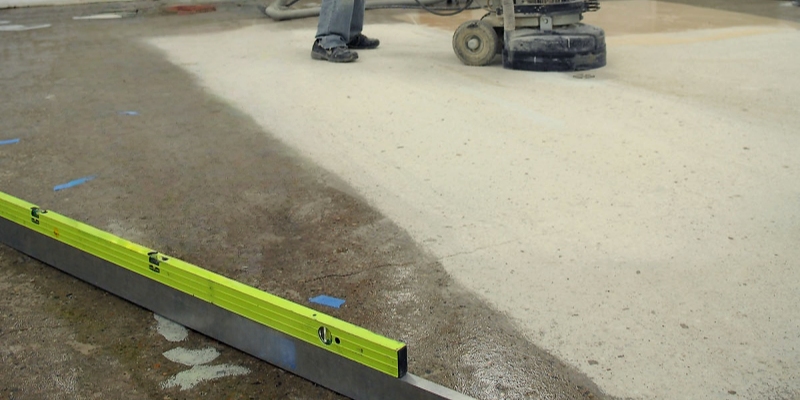
When refining concrete, terrazzo, or stone floors, the terms "burnishing" and "polishing" are frequently confused, but they represent distinct finishing techniques, particularly regarding the tools used. Recognizing these differences is crucial for choosing the appropriate method to achieve the desired look and durability of the surface.


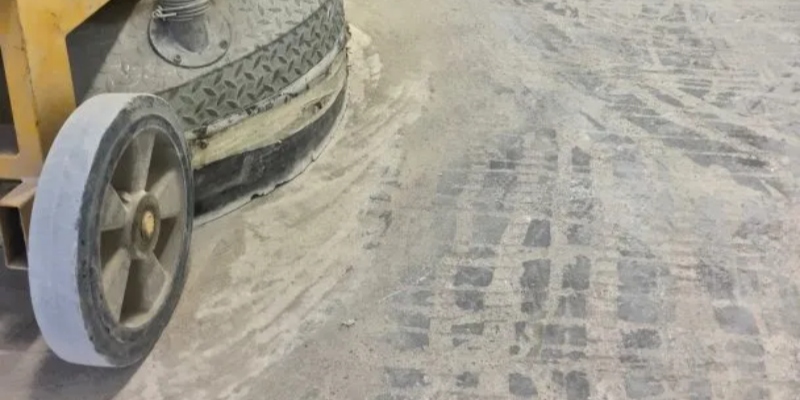
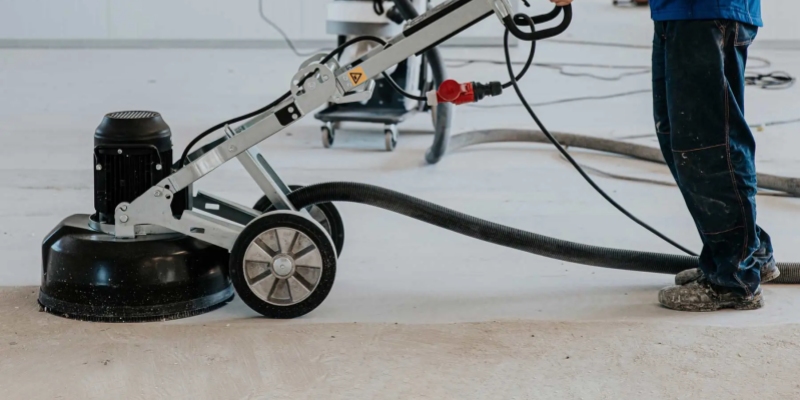
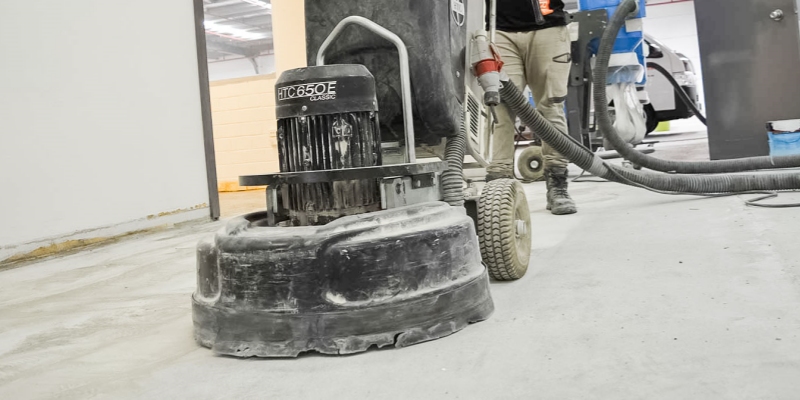
Polishing is a detailed mechanical process that involves multiple steps with progressively finer abrasives to eliminate scratches and create a smooth, shiny finish. It usually begins with metal diamond grinding tool for grinding, followed by resin polishing pad. These tools penetrate the surface layer, gradually enhancing it to a high-gloss finish. The focus of polishing is on improving surface flatness and clarity, making it a common choice for preparing floors in retail, commercial, and upscale residential environments.


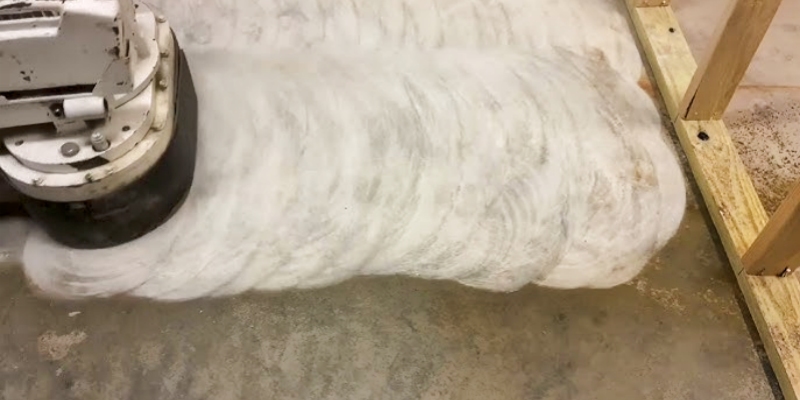
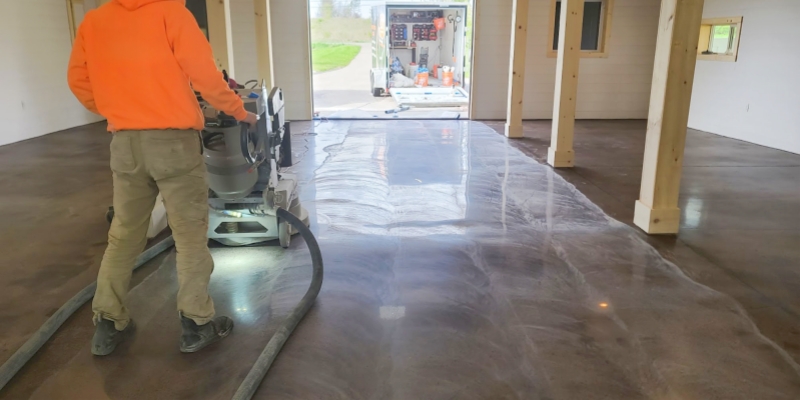
In contrast, burnishing is more of a maintenance procedure rather than a material removal technique. It employs non-aggressive pads—often diamond-impregnated or fiber polishing pads—operating at high speeds to heat the surface and enhance its natural shine. Unlike polishing, burnishing does not remove material; instead, it improves the appearance of an already polished floor. Diamond burnishing pads are particularly favored for maintaining the shine of polished concrete without disturbing the surface.


Diamond burnishing pads


The difference in tool selection highlights the practical distinctions between the two methods. Polishing necessitates a range of tools with varying grit levels, such as resin-bond pads from 50 to 3,000 grit. Burnishing, however, typically requires fewer tools—often just a single high-speed machine with a burnishing pad that interacts with the surface through friction and pressure. This makes burnishing a quicker and more cost-effective option for regular maintenance.


While both techniques enhance the visual appeal of floors, polishing is about transformation, whereas burnishing focuses on preservation. Understanding when to use each method can help prevent unnecessary wear and reduce maintenance expenses. Choosing the right tools for each process ensures both effectiveness and long-term surface protection.