What does the different gear ratio of a worm gear screw jack mean?


The gear ratio (also called the transmission ratio) of a worm gear screw jack refers to the ratio between the rotational speed of the worm and the rotational speed of the screw, usually expressed as the ratio of the worm's speed to the screw's speed. The gear ratio directly affects the speed and output torque of the screw jack.

Meaning of Gear Ratio:

Definition of Gear Ratio:
The gear ratio (Transmission Ratio) is the transmission ratio between the worm wheel and the worm, usually represented by the ratio of the number of teeth on the worm wheel to the number of threads on the worm. For example, if the worm wheel has 50 teeth and the worm has 10 threads, the gear ratio would be 5:1.

Impact on Speed:
The gear ratio determines the relationship between the rotational speed of the worm and the screw. The larger the gear ratio, the slower the worm's speed and the slower the screw's lifting speed. Therefore, a higher gear ratio will slow down the screw's movement, which is suitable for applications requiring precise control. A lower gear ratio will result in faster screw movement, which is suitable for quick lifting needs.

Impact on Torque:
The larger the gear ratio, the greater the torque transmitted from the worm to the screw. In cases of heavy loads, a larger gear ratio can provide higher output torque, allowing the jack to support heavier loads.

  • Low Gear Ratio (e.g., 1:1 or 3:1) typically provides higher speed but lower output torque, making it suitable for light load, high-speed applications.

  • High Gear Ratio (e.g., 10:1 or 20:1) provides greater torque, making it suitable for applications requiring higher load capacity and precision, but with slower speed.

Gear Ratio and Application Scenarios:

Higher Gear Ratio (e.g., 20:1, 30:1):

  • Suitable for high-load, low-speed applications. Due to lower speed, it provides greater torque, making it ideal for heavy-duty equipment or precision-controlled applications, such as precision lifting platforms and large machinery.

  • Typical Applications: Lifting platforms, heavy-duty cranes, precision machinery.

Lower Gear Ratio (e.g., 3:1, 5:1):

  • Suitable for light-load, high-speed applications. Due to the smaller gear ratio, the speed is higher, but the torque is lower, making it suitable for applications that require faster movement but are not designed for heavy loads.

  • Typical Applications: Light-duty conveyor systems, automated production lines, etc.

Impact of Gear Ratio on Self-locking Performance:

Worm gear screw jacks often feature a self-locking function, meaning that when the worm stops turning, the friction generated by the engagement between the worm and the worm wheel prevents the load from automatically sliding down. When the gear ratio is larger, the self-locking ability is stronger, because the engagement angle between the worm and the worm wheel is greater, making it more difficult for the load to move in the opposite direction.


What's the difference between Worm Gear Screw Jack and Bevel Gear Screw Jack?

1. Gear Mechanism

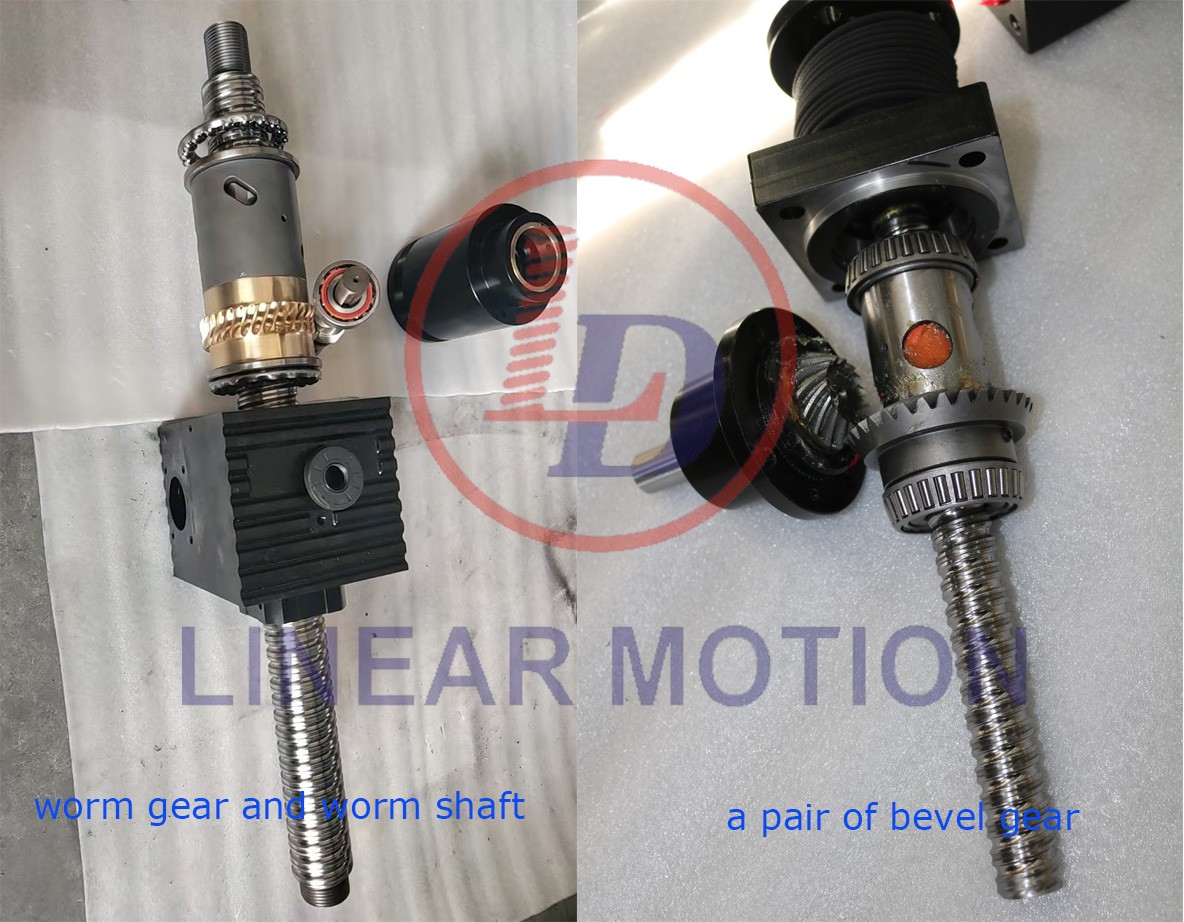
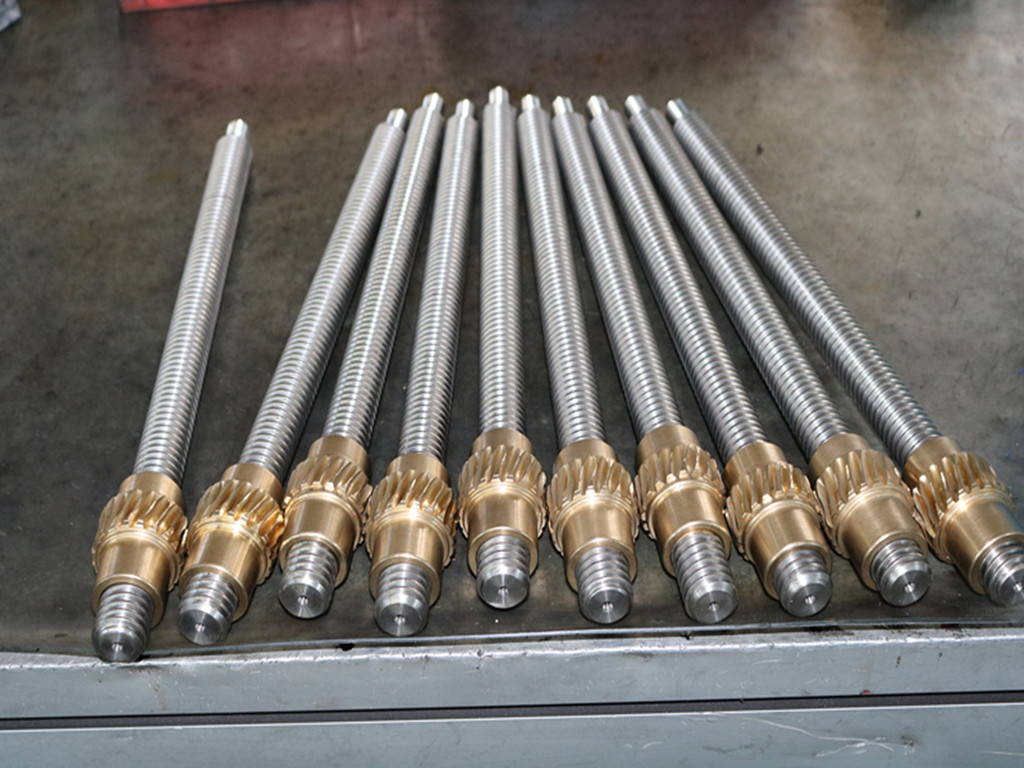
  • Worm Gear Screw Jack: Uses a worm gear mechanism, where a worm (screw) engages with a worm wheel (gear) to transmit motion. The worm gear reduces speed while increasing torque.

  • Bevel Gear Screw Jack: Uses bevel gears, which are conical gears designed to transmit motion between intersecting shafts, typically at a 90-degree angle.

2. Speed and Efficiency

  • Worm Gear Screw Jack: Generally slower but provides higher torque and self-locking capability.

  • Bevel Gear Screw Jack: Offers higher efficiency and faster speed but may require a brake system to prevent back-driving.

3. Load Handling Capacity

  • Worm Gear Screw Jack: Suitable for heavier loads due to its high torque output.

  • Bevel Gear Screw Jack: More suited for applications where high-speed movement and moderate load handling are required.

4. Self-Locking Feature

  • Worm Gear Screw Jack: Typically self-locking, meaning it can hold a load in position without additional braking.

  • Bevel Gear Screw Jack: Not usually self-locking, so an external brake or locking mechanism may be needed.

5. Efficiency & Power Consumption

  • Worm Gear Screw Jack: Less efficient due to friction in the worm gear system, leading to higher power consumption.

  • Bevel Gear Screw Jack: More efficient with lower power consumption due to better mechanical advantage.

6. Application Suitability

  • Worm Gear Screw Jack: Used in applications requiring high force, stability, and safety, such as lifting platforms, heavy machinery, and presses.

  • Bevel Gear Screw Jack: Ideal for applications needing high-speed movement with moderate force, such as automation systems, conveyor adjustments, and stage lifting.


You can choose the appropriate lift according to your working conditions.You can choose the appropriate lifter according to your working conditions. If it is slow, low frequency and self-locking, the worm gear screw lifter is suitable. If it is fast and high frequency, then the bevel gear lifter is suitable.


Why can't the load of servo electric cylinder be too large?

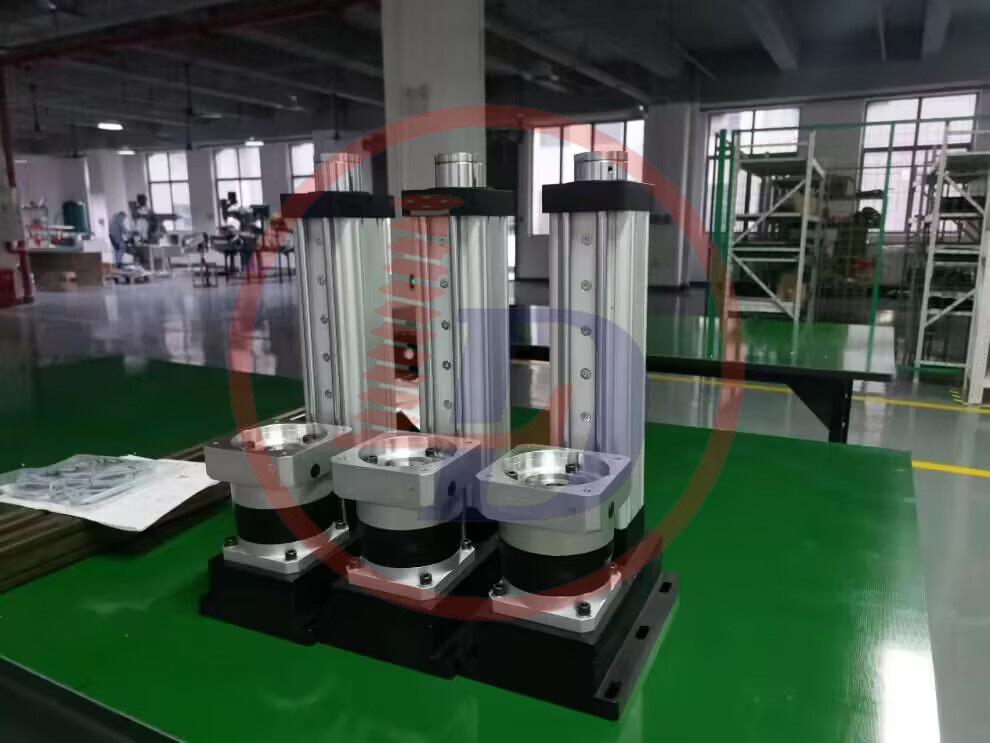
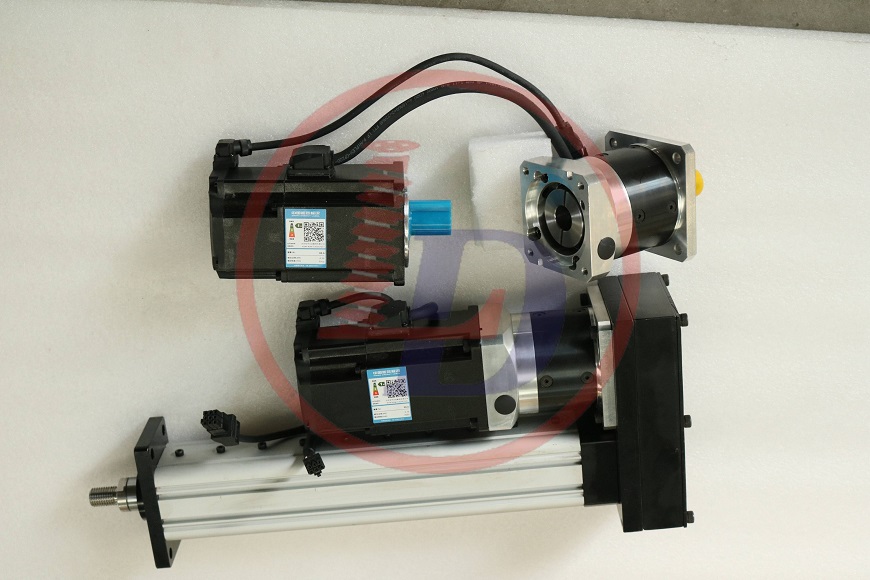
servo electric cylinders

The load capacity of servo electric cylinders cannot be very high mainly due to the following reasons:


1. Servo motor power limitations: Servo electric cylinders are driven by servo motors, which have limited power. When the load is too large, the motor may not be able to provide sufficient torque to move the load, potentially resulting in motor overload or even burnout.

2. Transmission system limitations: Servo electric cylinders typically use mechanical transmission components (such as gears or ball screws) to transfer motion from the motor to the load. Excessive load can put too much stress on these components, leading to wear, damage, or failure.

3. Control system responsiveness: Servo control systems regulate motor operation by adjusting current and voltage. When the load is too heavy, the system may not be able to control the motor precisely, leading to positioning errors, system shutdowns, or overload protection activation.


4. Efficiency issues: High loads can reduce the operational efficiency of the electric cylinder, causing increased heat generation. Excessive load may also affect the effectiveness of the cooling system, raising the system temperature and shortening the lifespan of the electric cylinder.


5. Decreased precision and stability: Servo electric cylinders are typically designed to deliver high-precision motion within a specified load range. Overloading can reduce accuracy and compromise system stability, possibly causing vibrations or abnormal noises.

Therefore, when selecting a servo electric cylinder, it is essential to choose a model that matches the specific application requirements. Ensuring the load remains within the design limits of the cylinder is critical to avoid overload and ensure reliable operation.

servo electric cylinders


Capacity expansion is on the way, is the market demand for high-speed interconnection wire harness components optimistic?

Looking back from the new starting point of 2025, we have experienced an extraordinary 2024 together. The global cable industry is undergoing structural changes: on the one hand, the AI ​​computing power revolution has spawned new opportunities, and the high-speed interconnection product line has maintained a compound growth rate of more than 30% for 18 consecutive months; on the other hand, the industry reshuffle has accelerated, and the profit margins of 78% of traditional cable categories have fallen below the 5% warning line. The high-speed interconnection supply chain is one of the product lines that currently maintains both profit and market growth. However, it is worth noting that the computing power arms race has entered a white-hot stage-the DeepSeeK algorithm revolution has compressed the computing power demand to 1/10 of ChatGPT, and NVIDIA has monopolized 83.7% of the global GPU market share with the H100/H200 series. This technological monopoly is triggering the reconstruction of the global supply chain. We have seen that Middle Eastern capital has set up a tens-billion-level GPU transit warehouse in South Korea through the Saudi sovereign fund, and India's Tata Group has jointly launched the "computing power corridor" plan with SoftBank. The domestic industrial landscape is also changing: H3C won a 15 billion high-speed order from Alibaba in a single month, Huawei's 8 billion AI server project was launched ahead of schedule, and the growth rate of the East China market was 42 percentage points higher than the traditional market in North China. This computing power revolution is reshaping our industrial landscape at an astonishing speed.

The most common application interfaces of high-speed interconnect cable harness components are SlimSAS, MICO, GEN Z, CXL, etc., all of which are dedicated to high-performance interconnect technology on the server side. Its mission is to enable processor-level bandwidth, from processor to system I/O to storage network, to traverse the entire data center, forming a unified neural network including server interconnection, server and storage interconnection, and storage network. These technologies are open standard high-bandwidth, high-speed network interconnection technologies. At present, their development speed is very fast, and more and more large manufacturers are joining or returning to its high-performance computer interconnection technology camp, so the demand for connected high-speed components is growing rapidly. In the existing resource library, there are 34 finished component factories. The difficulty of producing high-speed cable finished components is mainly to ensure the consistency and reliability of batch output. The difficulty lies in meeting the requirements of high transmission indicators, precise structural design and process control, high conductor requirements, material selection and cost balance, mass production and consistency, etc., to ensure stable performance during large-scale applications. 

high speed cable

According to the current market dynamics and industry analysis, the high-frequency and high-speed cable components used in AI servers have not yet seen a global overcapacity, but there is a structural contradiction, that is, insufficient supply of high-end products, and repeated investment in low-end technology may lead to local overcapacity risks. International giants occupy the high-end market and obtain the main profit space by relying on technology monopoly, while domestic enterprises compete fiercely in the mid- and low-end fields but have meager profits, and most of them are OEMs for the top four companies. In the future, with the acceleration of domestic substitution and technological breakthroughs, high-end production capacity is expected to be gradually released, but we need to be vigilant against the risk of local overcapacity caused by repeated investment in the low end. The following is a specific analysis:


Demand side: AI server growth drives a surge in demand for high-frequency and high-speed cables

Explosion of computing power demand

The rapid development of AI servers has put forward higher requirements for high-frequency and high-speed cable components. For example, the power consumption of a single cabinet of NVIDIA's AI server is close to 200kW, and may reach 1MW in the future, which puts higher requirements on the signal transmission rate, heat dissipation capacity and stability of the cable.


According to TrendForce's forecast, AI server shipments are expected to grow by 41.5% in 2024, and may still maintain a growth rate of 20%-35% by 2025, directly driving the growth of demand for high-frequency and high-speed cables.

Technology upgrade requirements

The interconnection standard of AI servers has evolved from PCIe 4.0 to PCIe 5.0/6.0, which requires higher transmission rates (such as high-frequency signals above 56GHz) and low-loss performance (low Dk/Df values) of cables. Traditional cables can no longer meet the requirements and need to rely on high-frequency high-speed cable assemblies.

Substitution and supplementary role

In short-distance connection scenarios (such as within a rack and between chips), high-frequency high-speed copper cables have become the mainstream choice for partial replacement of optical fibers due to their low cost and good compatibility. It is estimated that by 2027, the annual compound growth rate of high-speed copper cable shipments will reach 25%, and the market size will reach 20 million.


Supply side: insufficient high-end production capacity, low-end production capacity faces the risk of overcapacity

High-end products rely on imports and technical barriers

The core technologies of high-frequency high-speed cables (such as high-frequency signal integrity design and high-performance copper clad laminate materials) are still monopolized by international giants such as Amphenol and Tyco. Although domestic companies have made breakthroughs in the field of copper clad laminate resins (such as BMI and PPO), the large-scale production capacity of high-end cable assemblies has not yet been fully formed.

Low-end homogeneous competition

The traditional cable industry has a problem of low-end overcapacity. Some companies have tried to turn to the high-frequency and high-speed field, but due to insufficient technology, they have repeated low-level investments. In fact, high-speed lines are not as simple as you think. From structural design to production equipment, more attention needs to be paid to details, especially the requirements for equipment and process materials will be more stringent.


Market structure: structural imbalance and domestic substitution opportunities

Supply and demand mismatch

The high-end cable components in the global AI server market are still in short supply, especially for products such as 224Gbps SerDes and liquid-cooled compatible cables. International manufacturers have saturated orders and extended delivery cycles. However, due to technical and financial limitations, some domestic companies can only produce mid- and low-end products. The equipment investment after 6.0 is already at another level, resulting in local overcapacity.

Future trends: technology upgrades and industry integration


Technology iteration direction

High-frequency and high-speed cables will develop towards higher frequency bands and lower losses, and need to be compatible with liquid cooling systems. The popularity of cold plate liquid cooling will further promote the miniaturization and high-density design of cable components.

How to choose the wire in the wire harness industry?

In the wiring harness industry, wire as the core component, its performance is directly related to the overall performance of the wiring harness system. From automobiles to electronic equipment, from industrial machinery to aerospace fields, wires bear the heavy responsibility of transmitting current and signals in various wiring harness application scenarios, just like nerves and blood vessels in the human body, ensuring smooth information and stable power transmission between various systems.


Key characteristics and engineering verification of wire conductors:

(1) The ultimate pursuit of electrical performance

In the automotive wiring harness laboratory built by Aichie, the conductor conductivity must be verified according to IEC 60228 standards:

High purity copper conductor: using 4N grade oxygen-free copper (purity ≥99.99%), which reduces the resistivity to 1.724×10⁻⁸Ω·m, reducing energy consumption by 15% compared with conventional copper. In the new energy vehicle 800V high voltage platform harness, this optimization can reduce the charging loss by 2.3%.

Intelligent insulation system: Crosslinked polyethylene (XLPE) is combined with ceramic filler through a three-layer co-extrusion process to increase the pressure level to 3000V/mm. The charging wiring harness developed by Aichie Zhizao for a German car company still maintains the insulation resistance > 500MΩ·km under the working condition of -40℃~150℃.


(2) Breakthroughs in the scenization of physical properties

In the field of industrial robot joint harness, Aichie Intelligent innovation application multi-dimensional testing:

Dynamic bending test: Based on the VDA 235-106 standard, 1 million ±180° bending tests are carried out on the multi-stranded copper wire to ensure that the breakage rate of the wire is < 0.1%.

Composite reinforced structure: The combination design of aramide fiber reinforced layer and silver-plated copper conductor makes the tensile strength of the wire reach 600MPa, which has been successfully applied to the spacecraft solar panel drive wire harness.


(3) Strict verification of environmental adaptability

For the tropical automotive market, Aichie has developed special protective wires:

Salt spray test: 2000 hours of test under ASTM B117 standard, tinned copper conductor corrosion area rate < 5%.

Oil resistant solution: Using polyamide (PA) insulation layer, the volume expansion rate is < 3% after 1000 hours of oil immersion at 120℃, has been used in batches for heavy truck engine wiring harness.


Cable selection: Select the cable type based on the application scenario


Automotive industry: In the engine compartment, due to high temperature, vibration, oil and other complex environment, high temperature, oil and vibration resistant wires are often used, such as German standard FLRY-A and other models of wires; The door wiring harness needs to be bent due to frequent switching, and more flexible AVSS (thin insulated) wires are used. For sensors that transmit weak signals, such as knock sensors and crankshaft position sensors, electromagnetic shielding wires are required to prevent electromagnetic interference.

In the field of electronic equipment: In the miniaturized and high-performance electronic equipment such as mobile phones and tablet computers, the wires need to have the characteristics of small size, high precision and good flexibility. For example, FFC (flexible flat cable) terminal line can be arbitrarily selected the number and spacing of wires, greatly reducing the volume of electronic products, often used for motherboard and display, camera and other components to connect to achieve signal and power transmission.

Industrial equipment: industrial automation production line environment is complex, large vibration, strong electromagnetic interference. Wires used to connect industrial robots, CNC machine tools and other equipment, in addition to good electrical performance, but also need to have a high anti-interference ability and resistance to harsh environment, such as the use of double-layer shielded wires to resist electromagnetic interference, the use of wear-resistant, corrosion-resistant materials to deal with harsh industrial environments.

Aerospace: Aerospace wire harness wire requirements are very strict, need lightweight, high strength, high temperature resistance, radiation resistance. Wires are mostly made of special alloy materials and advanced manufacturing processes, such as silver-plated copper wires, which can ensure good electrical conductivity and reduce weight; The insulation material is made of polyimide and other high-performance materials to adapt to the extreme space environment and complex working conditions at high altitude.


The development trend of wire

(1) Research and development and application of high-performance materials

With the continuous improvement of wire performance requirements in various industries, the development of new high-performance materials has become a trend. In terms of conductor materials, in addition to optimizing the performance of copper and aluminum, the exploration of new conductive materials, such as carbon nanotube composite materials, is expected to achieve higher conductivity and better comprehensive performance. In the field of insulation materials, the research and development of materials with higher temperature resistance, radiation resistance and anti-aging properties, such as new ceramic based insulation materials, high-performance fluorine plastics, etc., to meet the needs of high-end fields such as aerospace and new energy vehicles.


(2) Miniaturization and lightweight design

In order to adapt to the development trend of miniaturization of electronic products and lightweight of automobiles, wires are developing in a thinner and lighter direction. On the one hand, by improving the manufacturing process, the diameter of the wire and the thickness of the insulation layer are reduced under the premise of ensuring the electrical and physical properties. On the other hand, the use of lightweight materials to replace the traditional heavier wire materials, such as in aerospace wire harnesses, the use of lightweight alloy wires and low-density insulation materials, while reducing the weight of the wire harness, without affecting its performance, improve the overall competitiveness of the product.


(3) Intelligent and multi-function integration

In the future, wires will not only be limited to the transmission of current and signal functions, and intelligent and multifunctional integration will become the development direction. For example, the research and development of a wire with self-monitoring function can monitor the temperature, current and other parameters of the wire in real time, once there is an abnormal early warning, improve system safety and reliability; The wire is integrated with sensors, communication modules, etc., to realize the integration of data acquisition, transmission and processing, and to provide support for the development of smart devices and smart grids.

Wire as the key basis of the wire harness industry, its performance, selection and development are closely related to the technical progress and product upgrades in various application fields. Continuously improving wire performance, optimizing selection criteria, and keeping up with development trends are the core driving forces for the continuous innovation and development of the wire harness industry.


In the wave of electrification and intelligence, Aichie will continue to deepen the core technology of wire research, to provide global customers with more reliable, more cost-effective wire harness solutions.
Smart Manufacturing How Wire Harness Producers Stay Competitive?

With the rapid development of automotive, electronics, communications and other fields, as an integral part of connecting internal components, the demand for wire harnesses continues to grow, which is not only a key component to ensure the normal operation of product functions, but also an important guarantee for product quality, safety and reliability. However, in the face of increasingly complex market demand and requirements for environmentally friendly production methods, wire harness processing industry is facing new challenges, how to improve production efficiency, reduce costs, ensure product quality and reduce environmental pollution at the same time, has become a major wire harness processing enterprises to solve the problem, automation and intelligence is undoubtedly the two core trends.


The "automation" engine continues to power, and the wiring harness equipment innovation runs out of "acceleration"

Generally speaking, wiring harness manufacturing process includes wiring, crimping, preassembly, assembly four links, of which wiring, crimping belongs to the former process, the high level of automation, while preassembly and assembly and other post-process tradition is mostly rely on manual manual assembly. Therefore, for a long time, wire harness processing has been regarded as a labor-intensive industry, especially in the post-assembly process such as pre-assembly and final assembly, the level of automation is low, the cost is high and the quality is difficult to guarantee. In order to solve these problems, more and more enterprises have begun to develop advanced automatic processing equipment, such as automatic stripping machine, terminal crimping machine, etc., which not only greatly improves production efficiency, but also significantly improves product quality and consistency.

Aichie Wire Harness Factory has significantly improved production efficiency and product quality through the introduction of leading automated production equipment, including advanced equipment such as precision terminal crimping machine and intelligent wire stripping machine. Aichie's intelligent manufacturing system achieves three core advantages:

1. Excellent quality: Using high-precision automation equipment to ensure product consistency of more than 99.9%

2. Cost advantage: Automated production reduces labor costs by 40%, providing customers with more competitive prices

3. Efficient delivery: 60% increase in production efficiency to ensure on-time delivery of orders


Through continuous technological upgrading and intelligent transformation, Aichie Wire Harness Factory is meeting the increasing needs of customers with better products and services.

Revelation:

The intelligence of medium-sized wiring harness factory is not a simple equipment competition, but needs to grasp three key dimensions:

Precise positioning: Deep cultivation of high value areas such as high pressure/special wiring harness

Progressive investment: Phased implementation of digital transformation (recommended ROI cycle control within 3 years)

Deep binding: Build technology symbiosis with customers through joint development


In this industrial revolution led by automation and intelligence, Aichie wire harness factory has proved in practice that wire harness processing is no longer a simple "wire connection", but needs to integrate material science, precision manufacturing, data intelligence complex technology system. When traditional enterprises are still anxious about labor costs, pioneers have established an insurmountable moat through technological innovation - this may be the best period for manufacturing in China to transition to intelligent manufacturing in China.

Technical trends and market forecasts of high-voltage connectors

As the market explosiveness of new energy vehicles continues to increase, the market size of automotive connectors continues to expand. According to Bishop & Associates (a global connector market research organization), the global automotive connector market size will reach US$19.452 billion in 2025, of which China's automotive connector market will account for 23% of the total, with a size of approximately US$4.468 billion. China is the world's largest automobile producer and also a leading country in the research and development and output of new energy vehicles. In the next few years, the size of China's on-board connector market is expected to exceed the forecast of Bishop & Associates.

HV sockets

High-voltage connector technology: high standards

The so-called "high-voltage connector" is a connector that serves the high-voltage system in the car. Traditional fuel vehicles mainly rely on engines and fuel to meet the requirements of the car for mechanical kinetic energy, and do not have too many requirements for voltage; while electric vehicles use electricity as energy, and use power batteries, drive motors, and drive motor controllers to complete the kinetic energy supply of the car, which puts forward higher standards for the voltage and current carrying capacity of related components.

High-voltage connectors and electric vehicles are interdependent. In 2009, my country issued the "Automotive Industry Adjustment and Revitalization Plan" and launched the "Ten Cities, Thousand Vehicles" subsidy plan to promote new energy vehicles. Since then, my country's high-voltage connectors have continued to move forward with the pace of new energy vehicles, and have developed to the fourth generation by 2022.


HV connectors


Xu Ping'an, chief technology officer of Basba, told us that the newly added "secondary unlocking" function of the third-generation product can protect the core electrical parts of the product and ensure the safety of users; the fourth-generation product is smaller in size, has a higher current density, and a controllable temperature rise, providing better safety and reliability for high-power charging and discharging. Basba New Energy Technology Co., Ltd. is a company focusing on high-voltage connection system solutions for electric vehicles, with 12 years of experience in the research and development of vehicle-mounted connectors. High-voltage vehicle-mounted connectors are mainly used in lithium batteries, motors, electronic controls, DC/DC converters, OBCs, PDUs and other systems, and work together with high-voltage wiring harnesses to transfer battery kinetic energy to various components with the help of high-voltage and high-current lines. Different system components and differences in the cross-sectional area of ​​wires have different electrical performance requirements for vehicle-mounted connectors. Generally speaking, the rated voltage values ​​of high-voltage connectors range from 60v to 1500v, and the rated current values ​​range from 20A to 300A. In addition, vehicle-mounted connectors also have high requirements for the mechanical and environmental performance of products. High-quality high-voltage connector products must pass various mechanical performance tests, environmental tests, and electrical performance tests, such as terminal retention, connector plug-in and pull-out force, drop test, 960H neutral salt spray test, 1008H aging test under 125℃ environment, -40℃~125℃ hot and cold shock, etc. As electric vehicles continue to move towards fast charging and super charging, various new energy vehicle companies are constantly improving the vehicle voltage platform. 2022 will be the first year for the upgrade from 400v to 800v high-voltage platform. The new challenges brought to high-voltage connectors are still concentrated on the electrical level. Can the rated voltage and rated current be further improved? And how to deal with the high temperature hazards caused by high-power current? The fifth-generation high-voltage connector is very likely to combine with liquid cooling technology to meet electrical and temperature requirements.


Supply and demand side of high-voltage connectors: large market

New energy vehicles can be divided into two categories: new energy passenger vehicles and new energy commercial vehicles according to their use.

According to the data of China Automobile Association, from January to September this year, the cumulative sales of new energy passenger vehicles reached 4.363 million units, a year-on-year increase of 111.5%; the cumulative sales of new energy commercial vehicles reached 204,000 units, a year-on-year increase of 80.1%. New energy passenger vehicles and commercial vehicles are driving the continuous expansion of the market for high-voltage connectors. In the field of low-voltage connectors, due to the difference in the time of automobile manufacturing, the technical patents have long been in the hands of foreign car companies, and the gap between the domestic and foreign low-voltage connector markets is significant. If the short board of my country's on-board connectors is the low-voltage connector, then the long board is at the end of the high-voltage connector. This is due to the rapid development of my country's new energy vehicles. Domestic car companies are keeping pace with foreign car companies, and even beautifully surpassing and leading. In the field of new energy commercial vehicles, high-voltage connectors have achieved a localization rate of nearly 100%, and have also surpassed foreign countries in terms of technology. my country's high-voltage connectors used in new energy commercial vehicles use integrated panels and have developed for many generations, while similar foreign products still retain the traditional lock body structure. At the same time, my country's new energy passenger car high-voltage connectors are also constantly increasing the domestic penetration rate. At present, the major enterprises in my country that have deployed high-voltage connectors for passenger cars include Rekoda, AVIC Optronics, Basba, Yonggui Electric, and Sunco Intelligent. Basba revealed that the localization rate of high-voltage connectors for passenger cars has exceeded 60%. In addition to the localization rate, high-voltage connectors are also far more valuable than low-voltage connectors. Since the battery pack capacity of new energy commercial vehicles is several times that of passenger car battery packs, the value of commercial vehicle high-voltage connectors is higher than that of passenger car high-voltage connectors.


High Voltage Plug


The future of high-voltage connectors: modularization

The technical orientation of supercharging and fast charging for new energy vehicles also affects the on-board connectors. As the battery capacity increases, the body becomes heavier and heavier, and the connectors and wiring harnesses are used more and more. Therefore, the modularization of components becomes more and more important.

The modularization of high-voltage connectors has many benefits. "Multifunctional integration and modularization can better meet the safety requirements of the whole vehicle. Lightweight, easy installation, lower cost, improved aesthetics, etc., these are the benefits of modularization and integration." Regarding the development trend of high-voltage connectors, Xu Ping'an, chief technology officer of Basba, also emphasized modularization and lightweight. In addition, the electromagnetic compatibility and volume current ratio capabilities of my country's high-voltage connectors and wiring harness assemblies also need to be continuously improved. The research and development certification of automotive-grade connectors is different from that of other types of connectors. For safety, reliability, and durability considerations, the total cycle of product self-certification plus customer certification is longer. High-voltage connectors and new energy vehicles are a "community of destiny". Riding the wind of new energy vehicles, the high-voltage connector market is soaring.

What are the processing procedures for high-voltage wiring harnesses in new energy electric vehicles?

With the rapid development of the global new energy vehicle industry, high-voltage wiring harnesses, as the "major arteries" for energy transmission in electric vehicles, their processing quality directly affects the safety and reliability of the entire vehicle. Compared with the low-voltage wiring harnesses of traditional fuel vehicles, the high-voltage wiring harnesses of new energy vehicles need to withstand working voltages of 300V to 800V and large currents of over 200A, which puts forward higher requirements for material selection, production processes and quality control.


As a professional automotive wiring harness manufacturer, Aichie Tach Manufacturing has supply high-voltage cable assemblies solutions for over 30 new energy wiring harness customers. Its products have passed international certifications such as IATF16949/UL/CE/TUV.


I. Selection of Core Materials for High-Voltage Wiring Harnesses

Conductor material: Multi-strand twisted copper wire (cross-sectional area 16mm²-150mm²) is adopted, with tin plating to enhance oxidation resistance. Silver-plated copper wire is used in special scenarios to reduce contact resistance

2. Insulating materials: Cross-linked polyethylene (XLPE), silicone rubber or polytetrafluoroethylene (PTFE), with a temperature resistance grade of 150℃-200℃

3. Shielding layer: Double-layer shielding structure (aluminum foil + braided copper mesh), with a shielding coverage rate of ≥85%, effectively suppressing electromagnetic interference

4. Sheath material: Flame-retardant TPE or TPU material, which has passed UL94 V-0 flame-retardant certification, and the wear resistance coefficient needs to meet the industry standardHV Cables


II. Wiring harness design Verification Stage

1. 3D wiring simulation: Utilize CATIA software to simulate the layout of the entire vehicle wiring harness, avoiding mechanical interference and electrical performance calculation in heat source areas: Accurately calculate voltage drop (≤3%), temperature rise (ΔT≤40℃), and current-carrying capacity margin

2. EMC simulation test: Predict the electromagnetic radiation value through CST software and optimize the shielding layer structure

3. Sample environmental testing: Conduct a 2000-hour salt spray test, 3,000 plug-and-pull tests, and a temperature shock test ranging from -40 ° C to 150 ° C

 chevrolet volt high voltage cable assembly

III. Core Processing Technology Flow

(1) Cable pretreatment

1. Automatic wire cutting: A servo-driven wire cutting machine is adopted, with the precision controlled within ±1mm. The cut surface should be smooth and free of burrs

2. Laser marking: Use ultraviolet laser to engrave line numbers, specifications and other information on the surface of the sheath, with a depth of 0.15-0.3mm

3. Terminal crimping: Completed by a fully automatic crimping machine, with a crimping height tolerance of ±0.02mm. The metallographic analysis of the profile must meet the VW60330 standard

4. Shielding treatment: Double-layer shielding layers are treated separately, with 360° aluminum foil covering and copper mesh braided density ≥90%

(II) Component Assembly

Injection molding: A vertical injection molding machine is used, with the mold temperature controlled at 80±5℃. The holding time is set according to the thickness of the material

2. Waterproof treatment: A double sealing structure (rubber gasket + potting compound) is adopted, with a protection level reaching IP67/ IP6K-9K

3. Assembly of high-voltage connectors: The pneumatic crimping equipment applies a torque of 50-80N·m, and the contact resistance is less than 0.5mΩ

4. Wire harness binding: High-temperature resistant cable ties are fixed at intervals of 150-200mm, with a bending radius of no less than 5 times the wire diameter

(3) Process Inspection

1. Online high-voltage testing: 2000V DC withstand voltage test (leakage current < 1mA/min), 1500V insulation resistance test

2. Conduction test: The micro-resistance tester detects the circuit impedance, with a deviation value of no more than 5%

3. Mechanical property test: Maintain a tensile force of 35kg for 1 minute, and the terminal displacement should be less than 0.2mm

4. Air tightness test: 3kPa air pressure test, leakage < 5mL/min


design high voltage cable assemblies


IV. Breakthroughs in Key Technologies of the industry

Lightweight technology: Aluminum wires are used to replace copper wires, reducing weight by 30% while maintaining electrical conductivity

2. Modular design: Develop integrated high-voltage distribution boxes to reduce connection nodes by more than 50%

3. Automated production: The introduction of six-axis robots enables automatic wiring, increasing efficiency by 40%

4. Intelligent detection System: By applying machine vision and AI algorithms, the defect detection rate has been increased to 99.8%


V. Key Points of Quality Control

1. Cleanliness management: The production environment maintains the ISO 14644-1 Class 8 cleanliness standard

2. Traceability System: Establish an MES production traceability system, with key parameters retained for at least 10 years

3. Process capability index: Critical dimensions CPK≥1.67, electrical characteristics CPK≥1.33

4. Aging test: 100% of the products undergo a 72-hour live aging test

 3 phase high voltage cable assembly ev


VI. Industry Development Trends

Voltage platform upgrade: Develop new materials capable of withstanding 1000V for 800V high-voltage systems

2. Integrated development: Integrate fuses and current sensors into the wiring harness assembly

3. Application of liquid cooling technology: Development of integrated high-voltage wiring harnesses with cooling pipelines

4. Sustainable manufacturing: Establish a copper material recycling system, and increase the material utilization rate to 98%


The processing of high-voltage wiring harnesses for new energy vehicles is a deep integration of precision manufacturing and intelligent technology. From conductor selection to assembly testing, each link needs to strictly follow standards and specifications such as IEC 62196 and GB/T 18487. With the increase of voltage platforms and the development of intelligent driving, high-voltage wiring harnesses will evolve towards high integration and intelligence in the future. Aichie will continue to improve its process technology and establish a full life cycle quality management system to provide reliable guarantees for the safe operation of new energy vehicles.

What is a high-voltage wiring harness for Electronic Vehicles?

Automotive high-voltage wiring harnesses are a type of cable system that has gradually become a key element along with the popularization of automotive technology, especially electric and hybrid vehicles. The following is a detailed introduction to automotive high-voltage wiring harnesses:


I. Definition and Function of HV Cable Harness

High-voltage wiring harnesses refer to cable systems used for transmitting high-voltage power signals and are mainly applied in electric vehicles and hybrid vehicles. These wiring harnesses are usually connected to batteries, inverters and motors to ensure the efficient transmission of electrical energy.


II. HV EV Cable Assembly Composition

High-voltage wiring harnesses are usually composed of the following parts:

1. Conductor: It is usually made of copper or aluminium and has good electrical conductivity.

2. Insulation layer: The key to preventing current leakage and short circuits. Insulating materials are usually cross-linked polyethylene (XLPE) or fluoroplastics, which can withstand high temperatures, are wear-resistant and have excellent electrical insulation properties.

3. Sheath: The outer protective layer of high-voltage wiring harnesses is usually made of materials that are resistant to high temperatures, oil and chemical corrosion.

4. Connector: It is used to connect the wiring harness with devices such as batteries and inverters. High-voltage connectors need to have excellent waterproof, dustproof and shockproof capabilities to adapt to the complex automotive working environment.


III. Characteristics and Requirements

1. Security

The design and manufacture of high-voltage wiring harnesses are directly related to the safety of automobiles. As high-voltage wiring harnesses carry the electrical energy of electric vehicles, once a fault occurs, it may lead to serious consequences such as short circuits and fires. Therefore, strict production standards and inspection procedures are important guarantees for ensuring the safety of high-voltage wiring harnesses.

2. Performance

The performance of high-voltage wiring harnesses affects the overall performance of a vehicle. For instance, the resistance and conductivity of the wiring harness directly affect the efficiency of current transmission, thereby influencing the power output and endurance of the motor. High-quality high-voltage wiring harnesses can effectively reduce energy loss and enhance the overall performance of electric vehicles.

3. Durability

High-voltage wiring harnesses need to withstand various complex environmental conditions throughout the life cycle of a vehicle, such as high temperature, low temperature, humidity, and vibration. Therefore, the material selection and manufacturing process of the wiring harness must have good durability. Durable high-voltage wiring harnesses can reduce maintenance frequency, lower usage costs and enhance consumer satisfaction.


IV. Classification and Layout

1. In new energy vehicles (taking pure electric as an example), high-voltage wiring harnesses can be divided into the following five major parts:

  • High-voltage cables for power batteries
  • The wiring harness connecting the power battery to the high-voltage box

2. Motor controller cable

The wiring harness connecting the high-voltage box to the motor controller

3. Fast charging wiring harness

The wiring harness connecting the fast charging port to the high-voltage box

4. Slow charging wiring harness

The wiring harness connecting the slow charging port to the on-board charger.

5. High-voltage accessory wiring harness (High-voltage wiring harness assembly)

The wiring harness connecting the high-voltage box to the DC/DC, on-board charger, air conditioning compressor and air conditioning PTC


The layout of high-voltage wiring harnesses for electric vehicles should follow the principle of proximity to minimize the use of high-voltage cables while meeting the requirements of the overall layout and high-voltage electrical design. In addition, it is necessary to pay attention to avoiding potential safety hazards such as electromagnetic interference, leakage of electricity and fire.


V. Notes

1. The layout of high-voltage wiring harnesses needs to comply with a series of safety requirements, such as visual concealment, compliance with safety collision regulations, consideration of ergonomics and ease of maintenance, etc

2. When arranging high-voltage wiring harnesses, it is essential to ensure that drivers, passengers or maintenance personnel cannot directly access the high-voltage wiring harnesses

3. When arranging high-voltage wiring harnesses, special attention should also be paid to avoiding areas with excessive squeezing and vibration amplitudes


In conclusion, automotive high-voltage wiring harnesses are an important component of electric vehicles and hybrid vehicles. Their safety, performance and durability are directly related to the overall performance and service life of the vehicle. Therefore, during the design and manufacturing process, it is necessary to strictly follow relevant standards and procedures to ensure the quality and reliability of high-voltage wiring harnesses.

Commercial vehicle high voltage cable assembly

What is an optical fiber cable harness?

With the rapid development of the automobile industry, the complexity of the automobile electronic system is increasing, and the requirements for the communication system are becoming increasingly strict. As an advanced signal transmission carrier, optical fiber wiring harness is widely used in automobile industry. Optical fiber, with its advantages of high speed, high reliability, low loss and anti-electromagnetic interference, is gradually changing the data transmission mode of automobiles, and has shown great application potential in the field of automotive communication. In this paper, the basic characteristics of fiber optic wiring harness and its application in automobile are discussed, and its advantages and development prospects are analyzed.

 Optical Fiber Cable

With the intelligent and connected automobile technology, the demand for communication and data transmission is increasing day by day, and the security and stability of vehicle electronic communication system has become the focus of research. As an advanced communication technology, optical fiber communication technology provides a new idea for the development of vehicle electronic communication system. This paper analyzes the characteristics of optical fiber communication technology, analyzes the application of optical fiber in the future automobile from many aspects, discusses its advantages, and looks forward to its development trend.


Technical overview of optical fiber wire harnesses

Optical fiber cable harness uses light wave as carrier and optical fiber as transmission medium. It has the advantages of high speed, high reliability, low loss and anti-electromagnetic interference. Its transmission rate is much higher than that of traditional copper wire or coaxial cable, which can meet the communication needs of vehicle systems for large data volume and high real-time. The link of optical fiber communication mainly consists of optical connector and optical fiber carrier to realize high-speed signal transmission.


1.1 Optical Fiber Connectors

Optical fiber connector is an optical passive device that realizes the active connection between optical fibers. It is mainly composed of optical fiber reinforcement, optical fiber alignment, elastic docking, head lock, optical cable fixing, pin anti-rotation, and optical cable buffering. Optical fiber connectors usually use ceramic pins and ceramic bushing for optical fiber alignment, and spring ensures elastic butt on the end face of the pins. The spring is in the pre-compression state before docking, so that the locking force of the pins will not move. During docking, the pins will produce secondary compression due to the back of the pins, and the elastic force will be fed back to the pins, so that the two pins of the docking are always in the stress contact and compression state during the docking process.

 Fiber Optical Cable

1.2 Optical Fiber Conductor

The cylindrical shape of the fiber is mainly composed of the core, cladding, and coating layer. The transmission principle of optical fiber uses the phenomenon of total reflection of light, that is, when the light is incident from the optically dense medium (relatively high refractive index) to the optically sparse medium (relatively low refractive index), if the incidence Angle is greater than the critical Angle of total reflection, the light will no longer refract, but all reflect back to the original medium, ensuring that the optical signal can spread in the fiber without leaking out.

 Fiber Optical Cable

The optical fiber has the following features:

(1) Transmission speed, distance, content: the transmission speed of optical fiber is very fast, can transmit data to a long distance, and can transmit a large amount of data at the same time.

(2) Free from electromagnetic interference: The optical fiber transmits the optical signal, which is not interfered by electromagnetic waves, so the signal quality is more stable.

(3) Bandwidth: Optical fiber has a very wide frequency band, which can support high-speed data transmission.

(4) Low loss: The transmission loss of optical fiber is very low, and it can theoretically transmit hundreds of kilometers or even more without losing signal quality.

(5) High security: the optical fiber transmission signal will not produce electromagnetic radiation, nor will it be eavesdropped by external electromagnetic waves, so it is more suitable for some scenarios with high data security requirements.

(6) Small size and light weight: Optical fiber is smaller and lighter than traditional copper cables, convenient deployment and maintenance, especially in large-scale communication networks, this advantage is more obvious.


Advantages of optical fiber harness in automotive intelligent application

When the transmission rate of copper wire reaches more than 10 GB/s, it will be necessary to use thicker copper wire to meet the speed requirements, but in the arrangement environment of the car, the thickening of the copper wire has brought about the increase of the weight of the vehicle and the increase of the cost of the car, which can not meet the requirements of the arrangement environment of the vehicle with high speed and low weight. The fiber optic wiring harness technology can significantly improve the quality and reliability of communication, reduce electromagnetic interference, and at the same time, improve the safety and stability of the vehicle without additional weight.


(1) The transmission rate of optical fiber cable harnesses is much higher than that of traditional copper wires or coaxial cables, and millions of megabytes of data can be transmitted per second, which can meet the communication needs of modern vehicles for large amounts of data and high real-time. The maximum speed of the traditional copper wire network can only reach 10GB/s, which is difficult to meet the requirements of high-speed transmission.

(2) The transmission loss of optical fiber is extremely low, and the loss per kilometer is usually less than 0.0035 dB/m, which can ensure that the signal still maintains a high quality during long-distance transmission. In contrast, the transmission loss of the traditional copper wire network is 0.5 dB/m, and the loss is large in the long-distance transmission process.

(3) Optical fiber communication technology uses light waves to transmit signals in optical fibers, which has significant immunity to electromagnetic interference compared with traditional copper wire transmission.

(4) Compared with traditional metal wires, Plastic Optical Fiber (POF), as a kind of automotive optical fiber, can significantly reduce vehicle mass and improve vehicle economy.


The application of fiber optic wiring harness technology in automobiles not only improves the quality and reliability of communication, but also helps to reduce the overall weight of the vehicle, improve fuel efficiency, and adapt to various extreme driving environments.